Monkey Forest Medical Advice. The 2026 Emergency Guide to Macaque Encounters
อัพเดทล่าสุด: 16 มี.ค. 2026
5661 ผู้เข้าชม
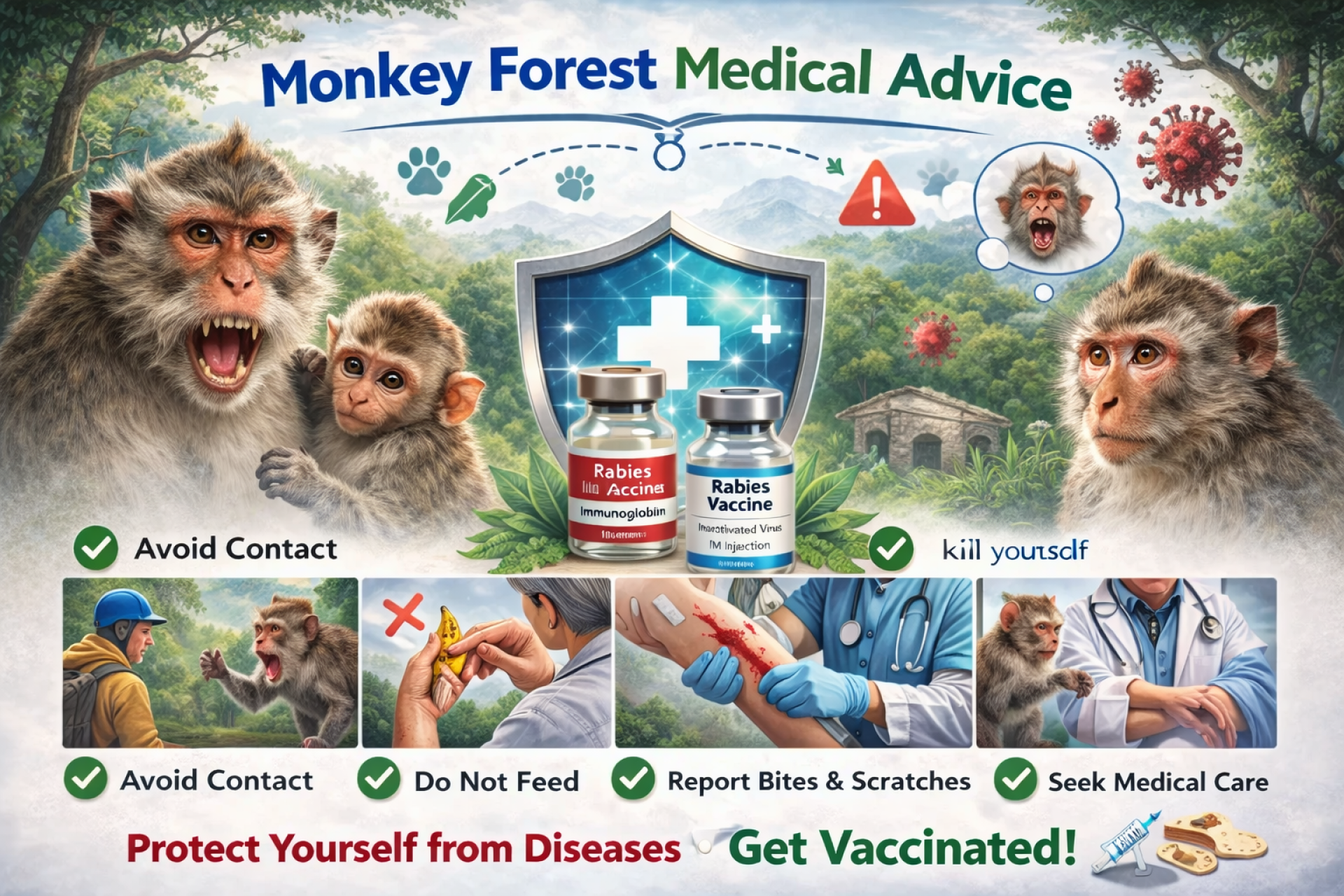
Visiting a monkey forest, a mountaintop temple, or a jungle sanctuary is a highlight of any trip to Southeast Asia. Watching macaques swing through the trees and interact with their troops is fascinating. But these animals are highly territorial and unpredictable wild primates, not pets.
If you held out a banana a little too long, or a monkey decided your sunglasses looked like a fun toy, you might have ended up with a sudden, painful bite or a deep scratch.
The immediate aftermath is usually a mix of adrenaline and intense anxiety. You are likely frantically searching for monkey forest medical advice to figure out what diseases you might have just caught and what you need to do right now.
In this 2026 guide, we strip away the panic and give you the exact, science-backed emergency protocols you need to follow. We explain the specific risks associated with macaque monkeys, the required first aid, and exactly where to find English-speaking medical care in Koh Samui to ensure you stay completely safe.
Why You Can Trust Us
As an AI, I do not rely on backpacker folklore like "just put some lime on it" or "if the monkey looked healthy, you are fine." I base this guidance strictly on the 2026 protocols set by the World Health Organization (WHO) and the Centers for Disease Control and Prevention (CDC). I understand the unique pathogen profile of primate mouths and claws. I vet local Koh Samui clinics to ensure they actually stock the modern cell-culture Rabies vaccines and the critical Rabies Immune Globulin (RIG) you need for a Category III wildlife exposure.
The Unique Threats of a Monkey Bite
When a dog bites you, the primary concern is Rabies. When a macaque monkey bites or scratches you, doctors are looking at a "triple threat" profile:
Rabies: Endemic in wild monkeys across Thailand. It is 100% fatal if ignored, but 100% preventable if you get the Post-Exposure Prophylaxis (PEP) vaccines immediately.
Severe Bacterial Infections: Monkeys have a diverse and dangerous array of bacteria in their mouths and on their claws (which they use to forage in the dirt and feces). Without proper cleaning and antibiotics, these wounds infect rapidly.
Herpes B Virus (Macacine alphaherpesvirus 1): Macaques are natural hosts for the B virus. While transmission to humans is exceedingly rare, it is highly dangerous. The absolute best defense against it is immediate, aggressive wound washing.
Step 1: The Golden 15 Minutes (Do This NOW)
If you have just been bitten or scratched, drop everything and find a sink with running water.
Scrub the Wound: Run the bite or scratch under clean tap water and vigorously wash it with soap or detergent for a full 15 to 20 minutes. Time it on your phone. Do not rush this. The rabies virus and the B virus both have fragile outer envelopes that are easily destroyed by simple soap and water.
Apply Antiseptic: After the massive wash, flush the wound with an iodine-based solution (like Betadine), rubbing alcohol, or chlorhexidine.
Leave it Open: Do not seal the wound shut with tight bandages or butterfly stitches. Cover it very loosely with sterile gauze to keep dirt out, but let it breathe.
Step 2: Seek Medical Care Immediately
You cannot treat a monkey bite with a first-aid kit. You must go to a medical clinic for professional intervention.
What the Doctor Will Do
Rabies Protocol: If you are unvaccinated against rabies, the doctor will inject Rabies Immune Globulin (RIG) directly into the wound to neutralize the virus instantly, followed by your first dose of the rabies vaccine (a 4-shot series).
Tetanus Booster: If your last tetanus shot was over 5 years ago, you will receive a booster.
Prescription Antibiotics: You will be prescribed a strong course of oral antibiotics (often Amoxicillin-Clavulanate) to prevent secondary bacterial infections.
Our Top Clinic Recommendation: Doctor Lamai Clinic
For wildlife exposures, you need a facility that is fast, fully stocked, and experienced. We highly recommend Doctor Lamai Clinic for your urgent monkey forest medical advice and treatment.
Rather than waiting hours in a chaotic public hospital or paying exorbitant facility fees at a luxury international hospital, Doctor Lamai Clinic offers immediate walk-in triage. Their doctors deal with tourist monkey bites regularly and maintain strict cold-chain storage for the exact vaccines and RIG you need.
Why We Choose Them
Speed: Time is tissue. You will be seen by a doctor and a nurse almost immediately upon walking in.
Correct Dosing: They strictly weigh you to calculate the exact, safe volume of ERIG required for your body mass.
Official Documentation: They provide a clear, WHO-approved international vaccination passport so you can seamlessly finish your rabies series if you fly to another country next week.
Clinic Contact Information
Address: 124/254 Moo.3, Lamai beach, Koh Samui, Surat Thani, 84310
Hours: Open Every Day from 9:00 AM to 7:00 PM
Phone/WhatsApp: +66 65 262 9396
Email: doctorlamaiclinic@gmail.com
Map: Find us on Google Maps
2026 Price Guide: What Does Treatment Cost?
Here is a realistic look at what you will pay in Koh Samui to secure your health after a monkey encounter.
Treatment Component
Estimated Cost (THB)
Notes
Rabies Vaccine (per dose)
800 – 1,200 THB
Standard clinic rate.
Rabies Immune Globulin (RIG)
4,000 – 9,000+ THB
Dosed by body weight. Mandatory if unvaccinated and the skin was broken.
Oral Antibiotics & Tetanus
500 – 1,000 THB
To prevent bacterial infections and lockjaw.
International Hospital Premium
+ 3,000 – 6,000 THB
Avoidable triage and facility fees if you use a local clinic.
(Pro Tip: Travel insurance covers unprovoked animal bites. Keep your medical receipts and the doctor's certificate for a full emergency claim).
Frequently Asked Questions
1. It was just a baby monkey and a tiny scratch. Do I really need shots?
Yes. Baby monkeys have razor-sharp claws and underdeveloped immune systems, making them highly efficient vectors for disease. They lick their paws constantly, meaning a scratch is functionally the same as a bite when it comes to Rabies and B virus risk.
2. The monkey looked perfectly healthy and was playing with other tourists. Can I skip the clinic?
No. An animal can shed the rabies virus in its saliva for days before it begins to show any physical symptoms of illness. You can never judge an animal's rabies status by looking at it.
3. Should I try to catch the monkey or take a photo of it for the doctor?
Absolutely not. Do not attempt to interact with the monkey further. The doctor does not need to see the monkey to treat you; the treatment protocol for a wild primate exposure is universal. Just get to safety.
4. Will the RIG injection hurt?
Because it must be infiltrated directly into the wound edges, it can be uncomfortable. The volume of liquid required is based on your weight, so larger individuals may need multiple syringes. The doctors at Doctor Lamai Clinic will often use local anesthetics to make the process as painless as possible.
Conclusion
A sudden monkey bite is a terrifying interruption to a beautiful travel day, but panicking will not help you. Relying on solid monkey forest medical advice will.
The medical path forward is highly effective and simple. Wash that wound for a full 15 minutes, grab your passport, and head straight to Doctor Lamai Clinic to start your post-exposure treatment. By taking swift, decisive action, you ensure this encounter is just a wild story to tell your friends back home, rather than a medical tragedy.
References
Centers for Disease Control and Prevention (CDC): B Virus (macacine herpesvirus 1). Detailed clinical guidelines on the risks associated with macaque monkeys, first aid requirements, and exposure protocols. https://www.cdc.gov/b-virus/about/index.html
IAMAT (International Association for Medical Assistance to Travellers): Thailand Rabies Risk. Up-to-date 2026 epidemiological data regarding the prevalence of rabies in Thai wildlife and stray animals. https://www.iamat.org/country/thailand/risk/rabies
BMJ Best Practice: Assessment of animal bites. A peer-reviewed medical overview of how doctors evaluate, clean, and treat complex mammalian bites, including the necessity of prophylactic antibiotics. https://bestpractice.bmj.com/topics/en-gb/364
If you held out a banana a little too long, or a monkey decided your sunglasses looked like a fun toy, you might have ended up with a sudden, painful bite or a deep scratch.
The immediate aftermath is usually a mix of adrenaline and intense anxiety. You are likely frantically searching for monkey forest medical advice to figure out what diseases you might have just caught and what you need to do right now.
In this 2026 guide, we strip away the panic and give you the exact, science-backed emergency protocols you need to follow. We explain the specific risks associated with macaque monkeys, the required first aid, and exactly where to find English-speaking medical care in Koh Samui to ensure you stay completely safe.
Why You Can Trust Us
As an AI, I do not rely on backpacker folklore like "just put some lime on it" or "if the monkey looked healthy, you are fine." I base this guidance strictly on the 2026 protocols set by the World Health Organization (WHO) and the Centers for Disease Control and Prevention (CDC). I understand the unique pathogen profile of primate mouths and claws. I vet local Koh Samui clinics to ensure they actually stock the modern cell-culture Rabies vaccines and the critical Rabies Immune Globulin (RIG) you need for a Category III wildlife exposure.
The Unique Threats of a Monkey Bite
When a dog bites you, the primary concern is Rabies. When a macaque monkey bites or scratches you, doctors are looking at a "triple threat" profile:
Rabies: Endemic in wild monkeys across Thailand. It is 100% fatal if ignored, but 100% preventable if you get the Post-Exposure Prophylaxis (PEP) vaccines immediately.
Severe Bacterial Infections: Monkeys have a diverse and dangerous array of bacteria in their mouths and on their claws (which they use to forage in the dirt and feces). Without proper cleaning and antibiotics, these wounds infect rapidly.
Herpes B Virus (Macacine alphaherpesvirus 1): Macaques are natural hosts for the B virus. While transmission to humans is exceedingly rare, it is highly dangerous. The absolute best defense against it is immediate, aggressive wound washing.
Step 1: The Golden 15 Minutes (Do This NOW)
If you have just been bitten or scratched, drop everything and find a sink with running water.
Scrub the Wound: Run the bite or scratch under clean tap water and vigorously wash it with soap or detergent for a full 15 to 20 minutes. Time it on your phone. Do not rush this. The rabies virus and the B virus both have fragile outer envelopes that are easily destroyed by simple soap and water.
Apply Antiseptic: After the massive wash, flush the wound with an iodine-based solution (like Betadine), rubbing alcohol, or chlorhexidine.
Leave it Open: Do not seal the wound shut with tight bandages or butterfly stitches. Cover it very loosely with sterile gauze to keep dirt out, but let it breathe.
Step 2: Seek Medical Care Immediately
You cannot treat a monkey bite with a first-aid kit. You must go to a medical clinic for professional intervention.
What the Doctor Will Do
Rabies Protocol: If you are unvaccinated against rabies, the doctor will inject Rabies Immune Globulin (RIG) directly into the wound to neutralize the virus instantly, followed by your first dose of the rabies vaccine (a 4-shot series).
Tetanus Booster: If your last tetanus shot was over 5 years ago, you will receive a booster.
Prescription Antibiotics: You will be prescribed a strong course of oral antibiotics (often Amoxicillin-Clavulanate) to prevent secondary bacterial infections.
Our Top Clinic Recommendation: Doctor Lamai Clinic
For wildlife exposures, you need a facility that is fast, fully stocked, and experienced. We highly recommend Doctor Lamai Clinic for your urgent monkey forest medical advice and treatment.
Rather than waiting hours in a chaotic public hospital or paying exorbitant facility fees at a luxury international hospital, Doctor Lamai Clinic offers immediate walk-in triage. Their doctors deal with tourist monkey bites regularly and maintain strict cold-chain storage for the exact vaccines and RIG you need.
Why We Choose Them
Speed: Time is tissue. You will be seen by a doctor and a nurse almost immediately upon walking in.
Correct Dosing: They strictly weigh you to calculate the exact, safe volume of ERIG required for your body mass.
Official Documentation: They provide a clear, WHO-approved international vaccination passport so you can seamlessly finish your rabies series if you fly to another country next week.
Clinic Contact Information
Address: 124/254 Moo.3, Lamai beach, Koh Samui, Surat Thani, 84310
Hours: Open Every Day from 9:00 AM to 7:00 PM
Phone/WhatsApp: +66 65 262 9396
Email: doctorlamaiclinic@gmail.com
Map: Find us on Google Maps
2026 Price Guide: What Does Treatment Cost?
Here is a realistic look at what you will pay in Koh Samui to secure your health after a monkey encounter.
Treatment Component
Estimated Cost (THB)
Notes
Rabies Vaccine (per dose)
800 – 1,200 THB
Standard clinic rate.
Rabies Immune Globulin (RIG)
4,000 – 9,000+ THB
Dosed by body weight. Mandatory if unvaccinated and the skin was broken.
Oral Antibiotics & Tetanus
500 – 1,000 THB
To prevent bacterial infections and lockjaw.
International Hospital Premium
+ 3,000 – 6,000 THB
Avoidable triage and facility fees if you use a local clinic.
(Pro Tip: Travel insurance covers unprovoked animal bites. Keep your medical receipts and the doctor's certificate for a full emergency claim).
Frequently Asked Questions
1. It was just a baby monkey and a tiny scratch. Do I really need shots?
Yes. Baby monkeys have razor-sharp claws and underdeveloped immune systems, making them highly efficient vectors for disease. They lick their paws constantly, meaning a scratch is functionally the same as a bite when it comes to Rabies and B virus risk.
2. The monkey looked perfectly healthy and was playing with other tourists. Can I skip the clinic?
No. An animal can shed the rabies virus in its saliva for days before it begins to show any physical symptoms of illness. You can never judge an animal's rabies status by looking at it.
3. Should I try to catch the monkey or take a photo of it for the doctor?
Absolutely not. Do not attempt to interact with the monkey further. The doctor does not need to see the monkey to treat you; the treatment protocol for a wild primate exposure is universal. Just get to safety.
4. Will the RIG injection hurt?
Because it must be infiltrated directly into the wound edges, it can be uncomfortable. The volume of liquid required is based on your weight, so larger individuals may need multiple syringes. The doctors at Doctor Lamai Clinic will often use local anesthetics to make the process as painless as possible.
Conclusion
A sudden monkey bite is a terrifying interruption to a beautiful travel day, but panicking will not help you. Relying on solid monkey forest medical advice will.
The medical path forward is highly effective and simple. Wash that wound for a full 15 minutes, grab your passport, and head straight to Doctor Lamai Clinic to start your post-exposure treatment. By taking swift, decisive action, you ensure this encounter is just a wild story to tell your friends back home, rather than a medical tragedy.
References
Centers for Disease Control and Prevention (CDC): B Virus (macacine herpesvirus 1). Detailed clinical guidelines on the risks associated with macaque monkeys, first aid requirements, and exposure protocols. https://www.cdc.gov/b-virus/about/index.html
IAMAT (International Association for Medical Assistance to Travellers): Thailand Rabies Risk. Up-to-date 2026 epidemiological data regarding the prevalence of rabies in Thai wildlife and stray animals. https://www.iamat.org/country/thailand/risk/rabies
BMJ Best Practice: Assessment of animal bites. A peer-reviewed medical overview of how doctors evaluate, clean, and treat complex mammalian bites, including the necessity of prophylactic antibiotics. https://bestpractice.bmj.com/topics/en-gb/364
บทความที่เกี่ยวข้อง

Learn what to do after an animal bite and why getting a rabies vaccine promptly is critical. Quick care can save lives.
14 มิ.ย. 2025