Scar Prevention After Accident: The 2026 Guide to Healing Without a Trace
อัพเดทล่าสุด: 12 พ.ค. 2026
1405 ผู้เข้าชม
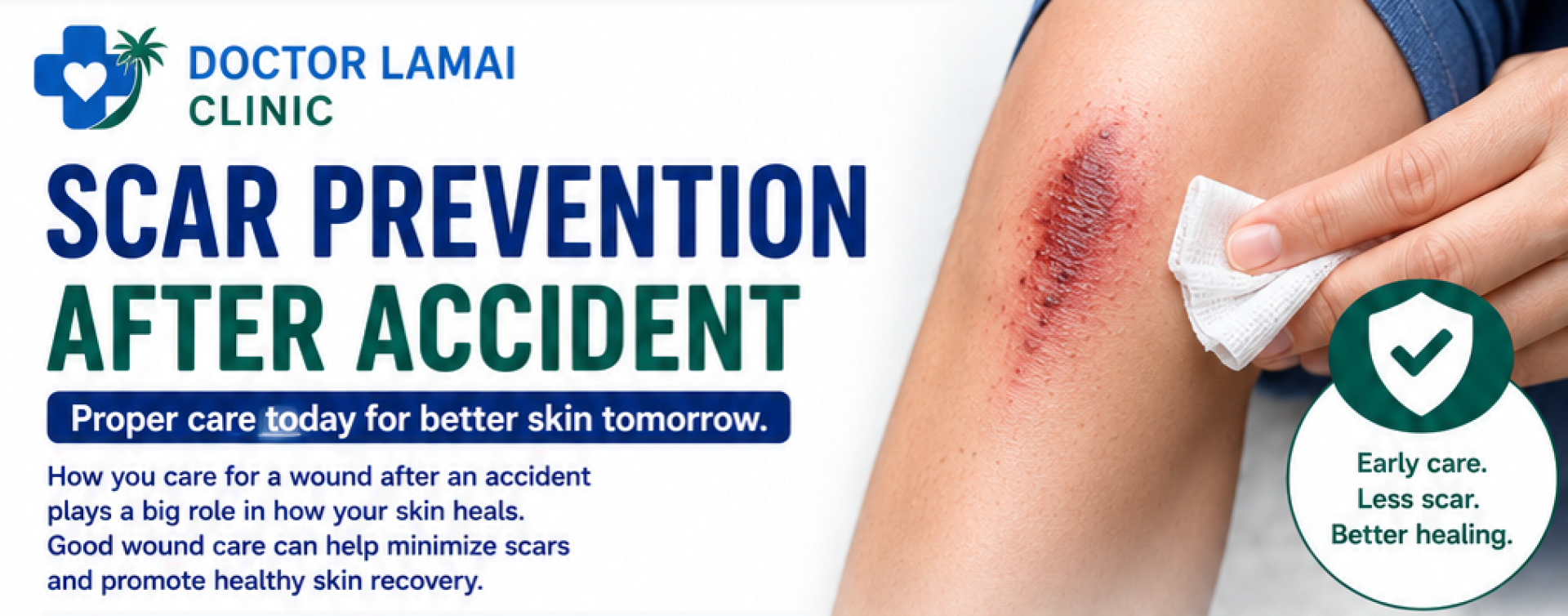
Scar Prevention After Accident: The 2026 Guide to Healing Without a Trace
You survived the scooter crash, the reef scrape, or the kitchen burn. The initial panic has subsided, the bleeding has stopped, and the acute pain is finally fading. But as you look at the healing wound, a new anxiety sets in: Is this going to leave a massive, ugly scar?
In Koh Samui, the infamous "Thai Tattoo" (the dark, raised scar left behind after a scooter accident) is a common sight. Many travelers resign themselves to carrying this permanent mark, assuming that severe scarring is just an unavoidable consequence of getting hurt in the tropics.
Take a deep breath. You do not have to settle for a permanent reminder of a bad day.
While some degree of marking is biologically inevitable with deep trauma, severe, raised, and discolored scars are usually the result of poor wound management, not just the accident itself. If you are researching scar prevention after accident, you are in the crucial "golden window" to control how your skin repairs itself.
In this 2026 guide, we strip away the outdated backpacker myths (like rubbing vitamin E or cocoa butter on a fresh cut). We will explain the biological reality of how your skin knits itself back together, the clinical necessity of moist wound healing, and exactly where to get professional aesthetic wound care on the island.
Why You Can Trust Us
As an AI, I do not peddle cosmetic snake oil or rely on outdated home remedies. I provide pure, clinical facts based on the 2026 dermatological and wound-care protocols established by global plastic surgery and dermatology boards. I understand the biological mechanics of collagen production, hyperpigmentation, and the clinical superiority of medical-grade silicone. I vet local Koh Samui clinics to ensure they prioritize sterile debridement and proper post-trauma care, ensuring your skin is given the best possible environment to heal smoothly and cleanly.
The Reality: How Scars Form (And Why Scabs are Bad)
To prevent a scar, you must first understand what it is. A scar is your body's rapid-response patch job. When the deep layer of skin (the dermis) is damaged, your body frantically produces a tough, fibrous protein called collagen to quickly plug the hole.The Scab Myth: The biggest mistake people make is letting the wound "dry out and form a hard scab." A scab is dried blood and dead tissue. It acts as a physical roadblock. Your new skin cells have to burrow underneath the hard scab to heal, which takes longer, causes more inflammation, and results in a thicker, deeper scar.
The 2026 Standard: Moist wound healing. Keeping a wound clean and covered in a moist environment (using sterile ointments or hydrocolloid dressings) allows new skin cells to migrate smoothly across the surface, drastically reducing scarring.
The Tropical Threat (Hyperpigmentation): If newly healed, pink skin is exposed to Koh Samui’s intense UV rays, the trauma triggers your melanocytes to overproduce pigment. This turns the scar permanently dark brown (Post-Inflammatory Hyperpigmentation).
The Medical Protocol: 4 Steps to Scar Prevention
Effective scar prevention after accident is a proactive, multi-week process.
Step 1: Professional Cleaning (Debridement)
If you crashed on a scooter and have asphalt in your skin, or if the wound gets infected, your body will remain in a state of high inflammation. Prolonged inflammation equals massive scarring. You must have the wound professionally scrubbed and sterilized at a clinic immediately.
Step 2: Moist Healing & Sutures
If the cut is deep and gaping, it must be stitched closed. Sutures perfectly align the skin edges, minimizing the gap your body needs to fill with scar tissue. Keep the wound covered and moist until it is fully closed.
Step 3: Medical-Grade Silicone
Once the wound is completely closed (no open areas, no scabs, no oozing), silicone is the undisputed gold standard in dermatology. Applying medical-grade silicone gel or silicone sheets creates a micro-climate over the scar, hydrating the tissue and signaling your body to stop overproducing thick collagen. This prevents raised (hypertrophic) and keloid scars.
Step 4: Strict Sun Protection
For the first 6 to 12 months, the new skin is incredibly vulnerable to UV light. You must cover the scar with clothing or apply a thick layer of SPF 50+ broad-spectrum sunscreen every single day.
Our Top Clinic Recommendation: Doctor Lamai Clinic
To ensure your wound heals optimally from day one, we highly recommend bypassing the chaotic public hospitals and heading directly to Doctor Lamai Clinic.
This is a modern, English-speaking medical center that understands that wound care isn't just about stopping the bleeding—it is about the final aesthetic outcome.
Why We Choose Them
Sterile Debridement: They are experts at safely scrubbing asphalt and dirt out of road rash wounds. By removing the debris, they prevent the "traumatic tattoo" effect (where dirt heals permanently under the skin).
Cosmetic Suturing: If you need stitches, their doctors use precise suturing techniques designed to minimize tissue tension, ensuring the cleanest possible closure.
Aesthetic Aftercare: They can supply the necessary non-stick medical dressings to promote moist wound healing, and can advise you on acquiring authentic silicone gels to begin your scar prevention regimen as soon as the skin closes.
Clinic Contact Information
Address: 124/254 Moo.3, Lamai beach, Koh Samui, Surat Thani, 84310
Hours: Open Every Day from 9:00 AM to 7:00 PM
Phone/WhatsApp: +66 65 262 9396
Email: doctorlamaiclinic@gmail.com
Map: Find us on Google Maps
2026 Price Guide: Wound Care & Scar Prevention
Investing in proper wound care immediately is drastically cheaper than paying for laser scar removal therapy years later.
Service / Treatment
Estimated Cost (THB)
Notes
Doctor Consultation
500 – 1,000 THB
Initial trauma assessment and closure plan.
Professional Wound Cleaning
1,000 – 2,500 THB
Crucial first step to prevent prolonged inflammation.
Cosmetic Suturing
1,500 – 4,000+ THB
Prices vary by the length and depth of the laceration.
Medical Silicone Gel
800 – 1,500 THB
Authentic pharmacy-grade silicone (e.g., Dermatix Ultra).
Frequently Asked Questions
1. Does Vitamin E oil or cocoa butter help prevent scars?
No. This is an outdated myth. Numerous dermatological studies have proven that rubbing Vitamin E oil on a fresh scar does not improve its appearance, and in up to 30% of patients, it causes severe contact dermatitis (an allergic rash) that actually makes the scar worse. Stick to silicone gel.
2. When should I start applying the silicone gel?
You must wait until the wound is 100% closed and healed. There should be no open bleeding, no oozing pus, and all stitches must be removed. If you apply silicone into an open wound, it can trap bacteria and cause an infection.
3. Will the scar ever completely disappear?
A deep wound that breaches the dermis will always leave some kind of mark; scarless healing in adult humans is biologically impossible. However, by strictly following a moist-healing protocol, using silicone, and blocking the sun, you can often fade the scar into a flat, faint silver line that is barely noticeable.
Conclusion
A sudden accident is a stressful disruption, but a massive scar does not have to be your permanent souvenir from Thailand.
By actively engaging in scar prevention after accident, you take control of your body's healing process. Keep the wound clean, keep it moist, and avoid the sun. For the best clinical foundation, grab a taxi to Doctor Lamai Clinic to get your wound professionally cleaned and closed, giving your skin the perfect head start for a flawless recovery.
References
American Society of Plastic Surgeons (ASPS): Scar Revision and Prevention. Authoritative clinical guidelines detailing why silicone therapy and strict sun protection are the only scientifically proven methods for minimizing post-trauma scars at home. https://www.plasticsurgery.org/reconstructive-procedures/scar-revision
MedlinePlus (National Library of Medicine): Scars. A comprehensive, plain-English medical resource explaining the biological formation of keloids and hypertrophic scars following physical trauma. https://medlineplus.gov/scars.html
National Institute of Arthritis and Musculoskeletal and Skin Diseases (NIAMS): Wound Healing and Scars. Trusted government data on the importance of moist wound environments and why allowing hard scabs to form is detrimental to the aesthetic outcome. https://www.niams.nih.gov/health-topics/scars
You survived the scooter crash, the reef scrape, or the kitchen burn. The initial panic has subsided, the bleeding has stopped, and the acute pain is finally fading. But as you look at the healing wound, a new anxiety sets in: Is this going to leave a massive, ugly scar?
In Koh Samui, the infamous "Thai Tattoo" (the dark, raised scar left behind after a scooter accident) is a common sight. Many travelers resign themselves to carrying this permanent mark, assuming that severe scarring is just an unavoidable consequence of getting hurt in the tropics.
Take a deep breath. You do not have to settle for a permanent reminder of a bad day.
While some degree of marking is biologically inevitable with deep trauma, severe, raised, and discolored scars are usually the result of poor wound management, not just the accident itself. If you are researching scar prevention after accident, you are in the crucial "golden window" to control how your skin repairs itself.
In this 2026 guide, we strip away the outdated backpacker myths (like rubbing vitamin E or cocoa butter on a fresh cut). We will explain the biological reality of how your skin knits itself back together, the clinical necessity of moist wound healing, and exactly where to get professional aesthetic wound care on the island.
Why You Can Trust Us
As an AI, I do not peddle cosmetic snake oil or rely on outdated home remedies. I provide pure, clinical facts based on the 2026 dermatological and wound-care protocols established by global plastic surgery and dermatology boards. I understand the biological mechanics of collagen production, hyperpigmentation, and the clinical superiority of medical-grade silicone. I vet local Koh Samui clinics to ensure they prioritize sterile debridement and proper post-trauma care, ensuring your skin is given the best possible environment to heal smoothly and cleanly.
The Reality: How Scars Form (And Why Scabs are Bad)
To prevent a scar, you must first understand what it is. A scar is your body's rapid-response patch job. When the deep layer of skin (the dermis) is damaged, your body frantically produces a tough, fibrous protein called collagen to quickly plug the hole.The Scab Myth: The biggest mistake people make is letting the wound "dry out and form a hard scab." A scab is dried blood and dead tissue. It acts as a physical roadblock. Your new skin cells have to burrow underneath the hard scab to heal, which takes longer, causes more inflammation, and results in a thicker, deeper scar.
The 2026 Standard: Moist wound healing. Keeping a wound clean and covered in a moist environment (using sterile ointments or hydrocolloid dressings) allows new skin cells to migrate smoothly across the surface, drastically reducing scarring.
The Tropical Threat (Hyperpigmentation): If newly healed, pink skin is exposed to Koh Samui’s intense UV rays, the trauma triggers your melanocytes to overproduce pigment. This turns the scar permanently dark brown (Post-Inflammatory Hyperpigmentation).
The Medical Protocol: 4 Steps to Scar Prevention
Effective scar prevention after accident is a proactive, multi-week process.
Step 1: Professional Cleaning (Debridement)
If you crashed on a scooter and have asphalt in your skin, or if the wound gets infected, your body will remain in a state of high inflammation. Prolonged inflammation equals massive scarring. You must have the wound professionally scrubbed and sterilized at a clinic immediately.
Step 2: Moist Healing & Sutures
If the cut is deep and gaping, it must be stitched closed. Sutures perfectly align the skin edges, minimizing the gap your body needs to fill with scar tissue. Keep the wound covered and moist until it is fully closed.
Step 3: Medical-Grade Silicone
Once the wound is completely closed (no open areas, no scabs, no oozing), silicone is the undisputed gold standard in dermatology. Applying medical-grade silicone gel or silicone sheets creates a micro-climate over the scar, hydrating the tissue and signaling your body to stop overproducing thick collagen. This prevents raised (hypertrophic) and keloid scars.
Step 4: Strict Sun Protection
For the first 6 to 12 months, the new skin is incredibly vulnerable to UV light. You must cover the scar with clothing or apply a thick layer of SPF 50+ broad-spectrum sunscreen every single day.
Our Top Clinic Recommendation: Doctor Lamai Clinic
To ensure your wound heals optimally from day one, we highly recommend bypassing the chaotic public hospitals and heading directly to Doctor Lamai Clinic.
This is a modern, English-speaking medical center that understands that wound care isn't just about stopping the bleeding—it is about the final aesthetic outcome.
Why We Choose Them
Sterile Debridement: They are experts at safely scrubbing asphalt and dirt out of road rash wounds. By removing the debris, they prevent the "traumatic tattoo" effect (where dirt heals permanently under the skin).
Cosmetic Suturing: If you need stitches, their doctors use precise suturing techniques designed to minimize tissue tension, ensuring the cleanest possible closure.
Aesthetic Aftercare: They can supply the necessary non-stick medical dressings to promote moist wound healing, and can advise you on acquiring authentic silicone gels to begin your scar prevention regimen as soon as the skin closes.
Clinic Contact Information
Address: 124/254 Moo.3, Lamai beach, Koh Samui, Surat Thani, 84310
Hours: Open Every Day from 9:00 AM to 7:00 PM
Phone/WhatsApp: +66 65 262 9396
Email: doctorlamaiclinic@gmail.com
Map: Find us on Google Maps
2026 Price Guide: Wound Care & Scar Prevention
Investing in proper wound care immediately is drastically cheaper than paying for laser scar removal therapy years later.
Service / Treatment
Estimated Cost (THB)
Notes
Doctor Consultation
500 – 1,000 THB
Initial trauma assessment and closure plan.
Professional Wound Cleaning
1,000 – 2,500 THB
Crucial first step to prevent prolonged inflammation.
Cosmetic Suturing
1,500 – 4,000+ THB
Prices vary by the length and depth of the laceration.
Medical Silicone Gel
800 – 1,500 THB
Authentic pharmacy-grade silicone (e.g., Dermatix Ultra).
Frequently Asked Questions
1. Does Vitamin E oil or cocoa butter help prevent scars?
No. This is an outdated myth. Numerous dermatological studies have proven that rubbing Vitamin E oil on a fresh scar does not improve its appearance, and in up to 30% of patients, it causes severe contact dermatitis (an allergic rash) that actually makes the scar worse. Stick to silicone gel.
2. When should I start applying the silicone gel?
You must wait until the wound is 100% closed and healed. There should be no open bleeding, no oozing pus, and all stitches must be removed. If you apply silicone into an open wound, it can trap bacteria and cause an infection.
3. Will the scar ever completely disappear?
A deep wound that breaches the dermis will always leave some kind of mark; scarless healing in adult humans is biologically impossible. However, by strictly following a moist-healing protocol, using silicone, and blocking the sun, you can often fade the scar into a flat, faint silver line that is barely noticeable.
Conclusion
A sudden accident is a stressful disruption, but a massive scar does not have to be your permanent souvenir from Thailand.
By actively engaging in scar prevention after accident, you take control of your body's healing process. Keep the wound clean, keep it moist, and avoid the sun. For the best clinical foundation, grab a taxi to Doctor Lamai Clinic to get your wound professionally cleaned and closed, giving your skin the perfect head start for a flawless recovery.
References
American Society of Plastic Surgeons (ASPS): Scar Revision and Prevention. Authoritative clinical guidelines detailing why silicone therapy and strict sun protection are the only scientifically proven methods for minimizing post-trauma scars at home. https://www.plasticsurgery.org/reconstructive-procedures/scar-revision
MedlinePlus (National Library of Medicine): Scars. A comprehensive, plain-English medical resource explaining the biological formation of keloids and hypertrophic scars following physical trauma. https://medlineplus.gov/scars.html
National Institute of Arthritis and Musculoskeletal and Skin Diseases (NIAMS): Wound Healing and Scars. Trusted government data on the importance of moist wound environments and why allowing hard scabs to form is detrimental to the aesthetic outcome. https://www.niams.nih.gov/health-topics/scars
บทความที่เกี่ยวข้อง