HIV Testing in Koh Samui: What to Know Before Getting Tested
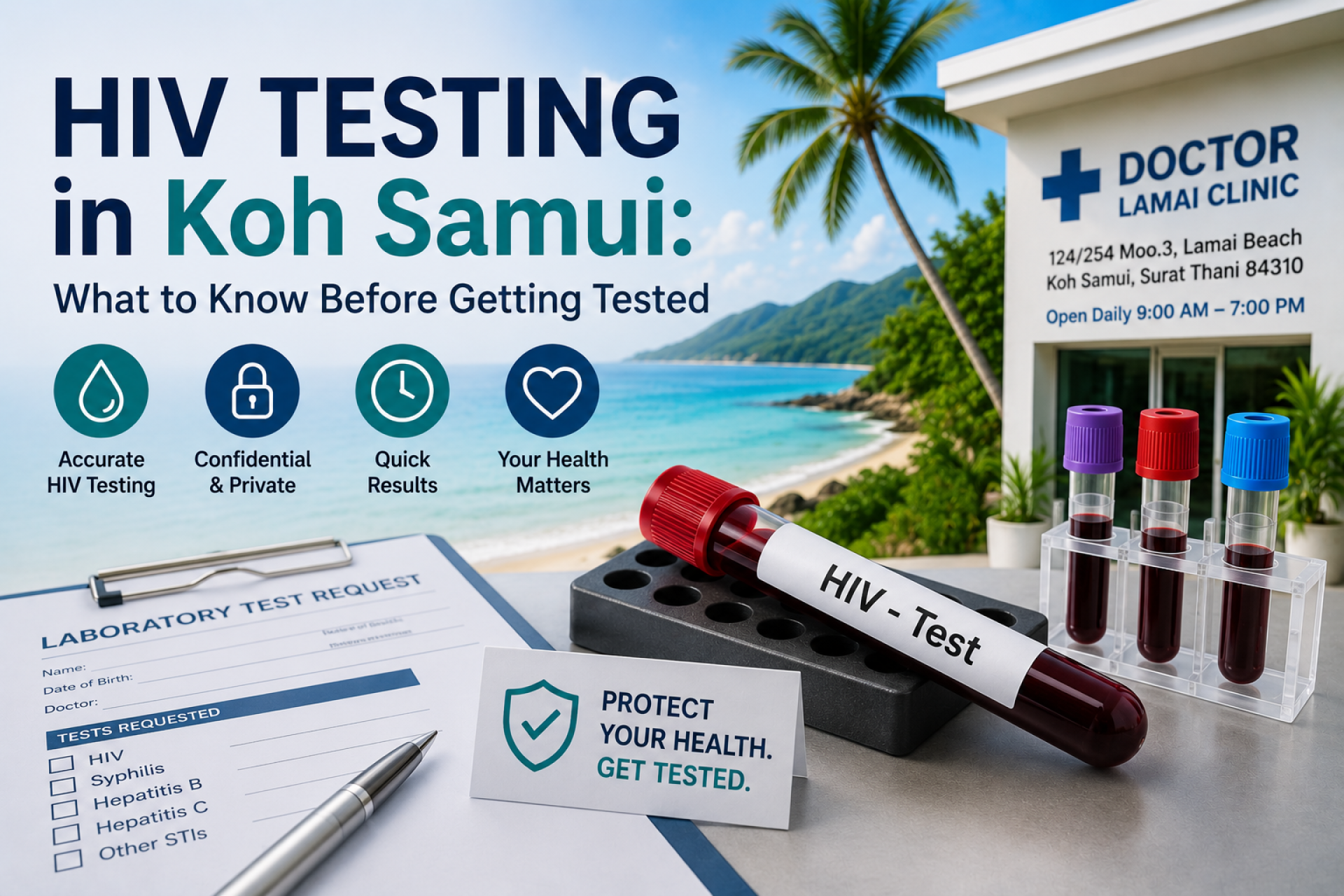
If you are looking for an HIV test in Koh Samui, you may have questions about where to get tested, which type of test you need, when to test after a possible exposure, how long results take, and what happens if the result is positive.
HIV testing is an important part of sexual health. Many people with HIV do not have noticeable symptoms, especially during the early stages of infection. Testing is therefore the only way to know your HIV status.
Whether you live in Koh Samui or are visiting the island as a tourist, you can speak with a healthcare professional about your situation and ask which HIV test is appropriate for you.
Doctor Lamai Clinic in Lamai Beach provides doctor consultations and blood and laboratory testing. If you are concerned about HIV or another sexually transmitted infection, the medical team can discuss your concerns and available testing options.
Where Can I Get an HIV Test in Koh Samui?
If you are searching for an HIV test near me in Koh Samui, a medical clinic that provides laboratory testing can be a convenient place to start.
Doctor Lamai Clinic is located at:
124/254 Moo.3, Lamai Beach, Koh Samui, Surat Thani 84310, Thailand
The clinic is open every day from 9:00 AM to 7:00 PM.
The clinic provides doctor consultations and laboratory testing, as well as other medical services including vaccination, wound care, IV drip therapy, and hotel and villa doctor visits.
If you need a specific HIV test, contacting the clinic before your visit is recommended so you can confirm the available testing method, preparation requirements, price, and expected turnaround time.
What Is an HIV Test?
An HIV test checks whether there is evidence of HIV infection in a person's body.
Different HIV tests look for different markers of infection. Depending on the test, this may include antibodies produced by the immune system, HIV antigen, or the virus itself.
Common HIV testing methods include:
- Antibody tests
- Antigen/antibody tests
- Nucleic acid tests (NATs)
The type of test used can affect how soon after an exposure HIV can be detected.
This is why the timing of your HIV test matters, particularly if you are testing because of a recent sexual exposure.
When Should You Get an HIV Test After Exposure?
One of the most common questions people ask is how soon they can test for HIV after a possible exposure.
The answer depends on the type of HIV test being used.
Different tests have different window periods, meaning the time between potential exposure and when a test can reliably detect infection. Testing too early may produce a negative result even if infection has occurred.
According to the CDC, laboratory antigen/antibody tests using blood from a vein can usually detect HIV approximately 18 to 45 days after exposure, while rapid antibody-based tests generally have longer window periods. NATs can detect HIV earlier in some circumstances.
If your possible exposure was recent, tell the healthcare professional exactly when it happened. They can advise you about the most appropriate testing schedule and whether repeat testing may be necessary.
What Is the HIV Window Period?
The HIV window period is the time after infection when an HIV test may not yet be able to detect the infection.
It does not mean that HIV is impossible to detect during this period. Rather, the ability to detect infection depends on the specific test and how much time has passed.
For this reason, a negative HIV test immediately after a possible exposure does not necessarily rule out infection.
If you are concerned about a recent exposure, discuss the timing with a healthcare professional instead of relying on one early test.
What Are the Symptoms of HIV?
HIV can cause symptoms, but symptoms alone cannot tell you whether you have HIV.
Some people experience a flu-like illness during the early stage of HIV infection, while others may have no noticeable symptoms.
Possible early symptoms can include:
- Fever
- Sore throat
- Fatigue
- Swollen lymph nodes
- Rash
- Muscle aches
These symptoms can also occur with many other common illnesses.
You should not use symptoms as a substitute for an HIV test. If you have had a possible exposure, testing is the reliable way to determine your HIV status.
Is HIV Testing the Same as an STD Test?
Not exactly.
HIV is one sexually transmitted infection, but an HIV test specifically checks for HIV. A broader STD or STI screening may involve testing for several different infections.
For example, depending on your situation, a healthcare professional may recommend testing for:
- HIV
- Syphilis
- Chlamydia
- Gonorrhea
- Hepatitis B
- Hepatitis C
Different infections require different tests. Some can be assessed with blood testing, while others may require urine or swab samples.
If you are concerned about more than HIV, tell the healthcare professional. They can help determine which additional STI tests may be appropriate.
Do You Need an HIV Test If You Have No Symptoms?
You may still need an HIV test even if you feel completely healthy.
Many people with HIV do not know they are infected because they have no obvious symptoms. Regular testing can help people understand their HIV status and seek appropriate medical care if necessary.
You may want to discuss HIV testing with a healthcare professional if:
- You had sex without a condom.
- A condom broke or slipped.
- You have had a new sexual partner.
- Your partner has HIV or you do not know their HIV status.
- You have another STI.
- You have shared needles or other injection equipment.
- You are concerned about a recent potential exposure.
Your individual testing needs depend on your circumstances and risk factors.
What Happens During an HIV Test?
The testing process depends on the test being used.
If a blood test is required, a healthcare professional collects a blood sample and sends or processes it for laboratory analysis.
Before testing, you may be asked about:
- When the possible exposure occurred
- What type of exposure occurred
- Whether you have experienced symptoms
- Previous HIV testing
- Previous STI diagnoses
- Any medications you are taking
Providing accurate information helps the healthcare professional determine the most appropriate testing approach.
You do not need to feel embarrassed when discussing sexual health. These are routine medical concerns, and honest information helps healthcare professionals provide appropriate care.
How Long Does an HIV Test Take?
The time required depends on the test and where the sample is processed.
Doctor Lamai Clinic provides blood and laboratory testing, and many laboratory results are available within approximately 30 minutes, depending on the test.
However, not every HIV test has the same turnaround time. Some tests may require additional laboratory processing and therefore take longer.
If you need your result quickly because you are traveling, ask the clinic about the expected turnaround time for the specific HIV test before testing.
How Much Does an HIV Test Cost in Koh Samui?
The cost of HIV testing in Koh Samui varies depending on the testing method, healthcare provider, laboratory, and whether a medical consultation or additional STI tests are required.
There is therefore no single price that applies to every HIV test.
If you are specifically looking for an HIV test in Koh Samui, contact the clinic and ask:
- Which HIV tests are available?
- How much does the test cost?
- Is a doctor consultation included?
- How long will the result take?
- Do I need any preparation before testing?
- Will I receive a laboratory report?
If you are also concerned about other STIs, ask whether additional testing is available.
What If Your HIV Test Is Positive?
If an HIV test produces a positive result, the next step is appropriate medical evaluation and confirmatory testing according to the testing algorithm being used.
A screening test result should not be interpreted on its own as a final diagnosis without the appropriate follow-up process.
If HIV infection is confirmed, modern HIV treatment can control the virus and help people live long, healthy lives. Starting treatment early is important.
HIV treatment can also reduce the amount of virus in the blood to very low levels. People who maintain an undetectable viral load through treatment do not sexually transmit HIV. This is commonly summarized as U=U, or Undetectable = Untransmittable.
If you receive a positive result, a healthcare professional can explain the next steps and help connect you with appropriate HIV care.
What If Your HIV Test Is Negative?
A negative result can be reassuring, but the timing of the test matters.
If you tested during the window period after a recent exposure, a negative result may not be conclusive. Depending on the type of test and when the exposure occurred, repeat testing may be recommended.
Discuss your result with a healthcare professional if you are unsure whether enough time has passed for the test to be reliable.
What Should You Do After a Recent High-Risk HIV Exposure?
If you believe you may have been exposed to HIV recently, seek medical advice as soon as possible.
Post-exposure prophylaxis (PEP) is medication that can reduce the chance of HIV infection after certain exposures. PEP is time-sensitive and should be started as soon as possible when indicated.
The CDC recommends starting PEP within 72 hours of a possible HIV exposure.
Do not wait for an HIV test result if you believe you may be eligible for PEP. Seek urgent medical advice and explain exactly when the exposure occurred.
HIV Testing for Tourists in Koh Samui
Tourists sometimes need medical testing during a trip, whether because of a recent sexual exposure, symptoms, or simply because they want to know their HIV status.
If you are staying in Lamai Beach, Chaweng, or elsewhere on Koh Samui, you can contact a local medical clinic about HIV testing.
If you are traveling soon after a possible exposure, tell the healthcare professional your travel schedule. This can help them discuss testing timing and any necessary follow-up.
If you have previous HIV or STI test results, bringing those records can also be useful.
Frequently Asked Questions About HIV Testing in Koh Samui
Where can I get an HIV test in Koh Samui?
Doctor Lamai Clinic in Lamai Beach provides doctor consultations and laboratory testing. Contact the clinic to confirm the available HIV testing options and current price.
How soon after exposure can HIV be detected?
It depends on the test. Different HIV tests have different window periods. A laboratory antigen/antibody test using blood from a vein can generally detect HIV earlier than many antibody-only tests.
Can I have HIV without symptoms?
Yes. HIV may cause no noticeable symptoms, particularly for long periods. Testing is the only way to know your HIV status.
Is an HIV test a blood test?
Many HIV tests use blood, although some approved HIV tests use other types of samples. The appropriate method depends on the test being used.
How long do HIV test results take?
The turnaround time depends on the test and laboratory. Doctor Lamai Clinic states that many laboratory results are available within approximately 30 minutes, although some tests may take longer.
How much does an HIV test cost in Koh Samui?
The price varies according to the test, clinic, laboratory, and whether additional services are required. Contact the clinic for current pricing.
Can tourists get an HIV test in Koh Samui?
Yes. Tourists can seek HIV testing and medical consultations in Koh Samui.
What should I do if I had a possible HIV exposure within the last 72 hours?
Seek urgent medical advice. PEP may be appropriate after certain exposures and is time-sensitive. It should be started as soon as possible and within 72 hours when indicated.
Conclusion
If you are looking for an HIV test in Koh Samui, the most important thing is to choose an appropriate test at the appropriate time. HIV does not always cause noticeable symptoms, so testing is important when there has been a potential exposure or when screening is recommended.
The type of HIV test and the time since exposure can affect how reliably infection can be detected. If you recently had a possible exposure, tell the healthcare professional when it happened so they can advise you about testing and whether additional follow-up is necessary.
For people staying in or around Lamai Beach, Doctor Lamai Clinic provides doctor consultations and blood and laboratory testing. Contact the clinic to confirm HIV testing availability, current pricing, preparation requirements, and expected result time.
If a possible HIV exposure occurred within the last 72 hours, seek medical advice immediately because PEP is time-sensitive.
```

")