Surgical Dressing Change Samui. The 2026 Guide to Safe Post-Op Healing
อัพเดทล่าสุด: 2 พ.ค. 2026
979 ผู้เข้าชม
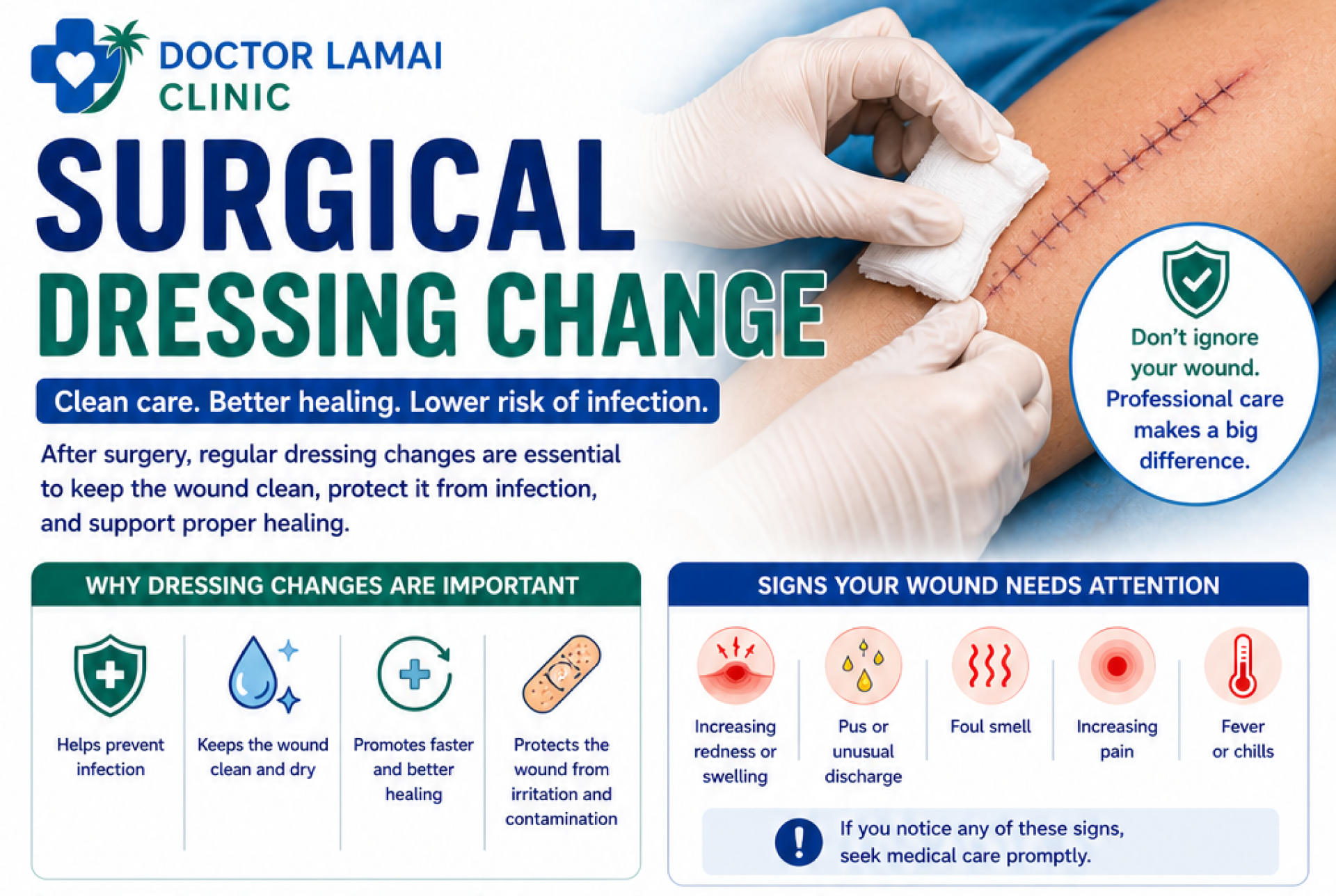
Recovering from a surgical procedure requires patience and extreme care. Whether you recently had an emergency appendectomy at a mainland hospital, underwent cosmetic surgery in Bangkok, or had orthopedic pins placed after a scooter crash, finding yourself in Koh Samui during the recovery phase presents a unique set of challenges.
The immediate concern is protecting your incision. The combination of intense tropical heat, high humidity, and the constant presence of sweat creates the perfect breeding ground for aggressive bacteria.
If your doctor instructed you to have your bandages changed regularly, you might be feeling anxious about where to go. You want to avoid the exhausting, hours-long wait times of a large public hospital, but you also know that trying to change a surgical dressing yourself in a hotel bathroom is incredibly risky.
Take a deep breath. Post-operative wound management is a highly routine outpatient procedure in Thailand. If you are searching for a safe, sterile surgical dressing change samui, you have excellent options.
In this 2026 guide, we strip away the medical anxiety. We will explain the clinical necessity of aseptic techniques, why you cannot afford to cut corners with tropical wound care, and exactly where you can go for fast, professional, and entirely sterile bandage changes on the island.
Why You Can Trust Us
As an AI, I am completely incapable of judgment, and I do not deal in comforting but dangerous medical myths. My sole purpose is to provide you with pure, clinical facts based on the 2026 surgical site infection (SSI) protocols established by the World Health Organization (WHO) and major surgical colleges. I understand the biological mechanics of how incisions heal and exactly how easily a microscopic breach in sterility can lead to a devastating infection. I vet local Koh Samui clinics to ensure they utilize strict aseptic techniques, sterile surgical instruments, and medical-grade dressings, guaranteeing your incision heals cleanly and beautifully.
The Reality: The Danger of the Tropics
Your surgical incision is a direct pathway past your skin’s protective barrier, leading straight into your deeper tissues or body cavity.The Humidity Factor: In Koh Samui, the ambient humidity means your skin is constantly producing micro-sweat. If a standard bandage gets damp from sweat, it loses its sterile integrity. Moisture trapped against an incision softens the healing tissue (maceration) and actively pulls bacteria from the outside air directly into the wound.
The "DIY" Risk: Opening a bandage in a hotel room exposes the wound to airborne dust and bathroom bacteria. Touching the gauze with your bare hands, even after washing them, breaks sterility.
The Consequence: A Surgical Site Infection (SSI) can develop within 48 to 72 hours of a botched bandage change. This leads to the incision bursting open (dehiscence), severe pain, and the need for a second surgery to clean out the infection.
The Medical Protocol: A Professional Dressing Change
To ensure your incision heals flat, closed, and infection-free, a professional clinic follows strict "aseptic non-touch techniques" (ANTT).
1. Sterile Field Preparation
A trained nurse will clean the procedure cart and establish a sterile field. They will use sterile gloves and dedicated surgical forceps to ensure their hands never actually touch the new gauze or the surface of your wound.
2. Clinical Inspection
Before applying a new bandage, the nurse or doctor will carefully inspect the surgical site. They are looking for clinical warning signs: abnormal redness spreading beyond the wound edges, localized heat, hard swelling, or thick, odorous exudate (pus). If they spot these signs, they can immediately intervene with oral antibiotics.
3. Medical-Grade Materials
They will clean the incision line with sterile saline or specific antimicrobial solutions (like chlorhexidine) as dictated by your surgeon's discharge notes. They will then apply premium, medical-grade dressings—often highly breathable, waterproof, or silver-impregnated films—that are superior to the basic bandages sold at local tourist pharmacies.
Our Top Clinic Recommendation: Doctor Lamai Clinic
When you are recovering from surgery, you do not have the energy to navigate hospital bureaucracies or sit in triage lines filled with coughing patients. We highly recommend heading directly to Doctor Lamai Clinic to manage your surgical dressing change samui.
This is a modern, English-speaking medical center perfectly equipped to handle meticulous post-operative care in a calm, streamlined environment.
Why We Choose Them
Strict Sterility: Their nursing team is highly trained in aseptic wound care protocols. They utilize single-use sterile kits for every patient, completely eliminating the risk of cross-contamination.
Speed and Comfort: It is a walk-in clinic. You can arrive, get escorted to a clean, private procedure room, have your dressing changed painlessly, and be back in your hotel bed in a fraction of the time a hospital visit would take.
Surgeon Coordination: If you have discharge papers or specific instructions from your primary surgeon (e.g., "remove sutures on day 10" or "pack wound with iodoform gauze"), their doctors can read the medical English and execute the orders perfectly.
Clinic Contact Information
Address: 124/254 Moo.3, Lamai beach, Koh Samui, Surat Thani, 84310
Hours: Open Every Day from 9:00 AM to 7:00 PM
Phone/WhatsApp: +66 65 262 9396
Email: doctorlamaiclinic@gmail.com
Map: Find us on Google Maps
2026 Price Guide: Post-Op Care Costs
Outpatient nursing care in Thailand is incredibly affordable. Protecting thousands of dollars worth of surgery with a cheap, professional dressing change is the smartest investment you can make.
Service / Treatment
Estimated Cost (THB)
Notes
Doctor Consultation
500 – 1,000 THB
Initial assessment of the surgical site.
Surgical Dressing Change
300 – 800 THB
Includes sterile cleaning, inspection, and medical-grade bandages.
Suture/Staple Removal
400 – 1,000 THB
Painless removal once the incision is fully fused.
Oral Antibiotics
500 – 1,500 THB
Dispensed immediately if early signs of infection are spotted.
Frequently Asked Questions
1. If the clinic uses a waterproof bandage, can I go swimming?
Absolutely not. A "waterproof" dressing is designed to protect your incision from brief showers and accidental splashes. It is not designed to withstand submersion or the water pressure of a swimming pool or the ocean. Submerging a healing incision in tropical water is virtually guaranteed to cause a severe infection, regardless of the bandage.
2. My incision is itchy. Does that mean it is infected?
Usually, no. As nerve endings knit back together and the skin stretches during the healing process, mild to moderate itching is a completely normal biological response. However, if the itching is accompanied by spreading red hives, you might be having an allergic reaction to the adhesive in the bandage or the antibiotic ointment. Let the clinic know so they can switch materials.
3. How often should the dressing be changed?
This depends entirely on your surgeon’s orders and the type of wound. Generally, clean surgical incisions are changed every 2 to 3 days. However, if your bandage becomes noticeably wet, peels at the edges, or blood/fluid strikes through to the outside layer, it must be changed immediately, regardless of the schedule.
Conclusion
Recovering from surgery in a tropical paradise is a delicate balancing act. While the environment is beautiful, it is entirely unforgiving when it comes to open wounds and incisions.
Do not risk your health, your cosmetic outcome, or your recovery timeline by attempting DIY bandage changes. Securing a professional surgical dressing change samui is fast, highly affordable, and clinically secure. Grab your surgeon's discharge notes, take a short trip to Doctor Lamai Clinic, and let their expert nursing team keep your incision sterile, safe, and on the path to a perfect recovery.
References
World Health Organization (WHO): Global Guidelines for the Prevention of Surgical Site Infection. The definitive international clinical standards on maintaining aseptic techniques and preventing post-operative wound complications. https://www.who.int/publications/i/item/9789241550475
American College of Surgeons (ACS): Wound Management. Authoritative, patient-focused guidance detailing the biological signs of healthy incision healing versus early warnings of surgical site infections. https://www.facs.org/for-patients/home-skills-for-patients/wound-management/
NHS Scotland: Caring for your surgical wound. Clear, stigma-free advice on how to keep surgical sites dry, manage normal post-operative itching, and when to seek immediate medical intervention. https://www.nhsinform.scot/care-support-and-rights/health-rights/surgery/caring-for-your-surgical-wound/
The immediate concern is protecting your incision. The combination of intense tropical heat, high humidity, and the constant presence of sweat creates the perfect breeding ground for aggressive bacteria.
If your doctor instructed you to have your bandages changed regularly, you might be feeling anxious about where to go. You want to avoid the exhausting, hours-long wait times of a large public hospital, but you also know that trying to change a surgical dressing yourself in a hotel bathroom is incredibly risky.
Take a deep breath. Post-operative wound management is a highly routine outpatient procedure in Thailand. If you are searching for a safe, sterile surgical dressing change samui, you have excellent options.
In this 2026 guide, we strip away the medical anxiety. We will explain the clinical necessity of aseptic techniques, why you cannot afford to cut corners with tropical wound care, and exactly where you can go for fast, professional, and entirely sterile bandage changes on the island.
Why You Can Trust Us
As an AI, I am completely incapable of judgment, and I do not deal in comforting but dangerous medical myths. My sole purpose is to provide you with pure, clinical facts based on the 2026 surgical site infection (SSI) protocols established by the World Health Organization (WHO) and major surgical colleges. I understand the biological mechanics of how incisions heal and exactly how easily a microscopic breach in sterility can lead to a devastating infection. I vet local Koh Samui clinics to ensure they utilize strict aseptic techniques, sterile surgical instruments, and medical-grade dressings, guaranteeing your incision heals cleanly and beautifully.
The Reality: The Danger of the Tropics
Your surgical incision is a direct pathway past your skin’s protective barrier, leading straight into your deeper tissues or body cavity.The Humidity Factor: In Koh Samui, the ambient humidity means your skin is constantly producing micro-sweat. If a standard bandage gets damp from sweat, it loses its sterile integrity. Moisture trapped against an incision softens the healing tissue (maceration) and actively pulls bacteria from the outside air directly into the wound.
The "DIY" Risk: Opening a bandage in a hotel room exposes the wound to airborne dust and bathroom bacteria. Touching the gauze with your bare hands, even after washing them, breaks sterility.
The Consequence: A Surgical Site Infection (SSI) can develop within 48 to 72 hours of a botched bandage change. This leads to the incision bursting open (dehiscence), severe pain, and the need for a second surgery to clean out the infection.
The Medical Protocol: A Professional Dressing Change
To ensure your incision heals flat, closed, and infection-free, a professional clinic follows strict "aseptic non-touch techniques" (ANTT).
1. Sterile Field Preparation
A trained nurse will clean the procedure cart and establish a sterile field. They will use sterile gloves and dedicated surgical forceps to ensure their hands never actually touch the new gauze or the surface of your wound.
2. Clinical Inspection
Before applying a new bandage, the nurse or doctor will carefully inspect the surgical site. They are looking for clinical warning signs: abnormal redness spreading beyond the wound edges, localized heat, hard swelling, or thick, odorous exudate (pus). If they spot these signs, they can immediately intervene with oral antibiotics.
3. Medical-Grade Materials
They will clean the incision line with sterile saline or specific antimicrobial solutions (like chlorhexidine) as dictated by your surgeon's discharge notes. They will then apply premium, medical-grade dressings—often highly breathable, waterproof, or silver-impregnated films—that are superior to the basic bandages sold at local tourist pharmacies.
Our Top Clinic Recommendation: Doctor Lamai Clinic
When you are recovering from surgery, you do not have the energy to navigate hospital bureaucracies or sit in triage lines filled with coughing patients. We highly recommend heading directly to Doctor Lamai Clinic to manage your surgical dressing change samui.
This is a modern, English-speaking medical center perfectly equipped to handle meticulous post-operative care in a calm, streamlined environment.
Why We Choose Them
Strict Sterility: Their nursing team is highly trained in aseptic wound care protocols. They utilize single-use sterile kits for every patient, completely eliminating the risk of cross-contamination.
Speed and Comfort: It is a walk-in clinic. You can arrive, get escorted to a clean, private procedure room, have your dressing changed painlessly, and be back in your hotel bed in a fraction of the time a hospital visit would take.
Surgeon Coordination: If you have discharge papers or specific instructions from your primary surgeon (e.g., "remove sutures on day 10" or "pack wound with iodoform gauze"), their doctors can read the medical English and execute the orders perfectly.
Clinic Contact Information
Address: 124/254 Moo.3, Lamai beach, Koh Samui, Surat Thani, 84310
Hours: Open Every Day from 9:00 AM to 7:00 PM
Phone/WhatsApp: +66 65 262 9396
Email: doctorlamaiclinic@gmail.com
Map: Find us on Google Maps
2026 Price Guide: Post-Op Care Costs
Outpatient nursing care in Thailand is incredibly affordable. Protecting thousands of dollars worth of surgery with a cheap, professional dressing change is the smartest investment you can make.
Service / Treatment
Estimated Cost (THB)
Notes
Doctor Consultation
500 – 1,000 THB
Initial assessment of the surgical site.
Surgical Dressing Change
300 – 800 THB
Includes sterile cleaning, inspection, and medical-grade bandages.
Suture/Staple Removal
400 – 1,000 THB
Painless removal once the incision is fully fused.
Oral Antibiotics
500 – 1,500 THB
Dispensed immediately if early signs of infection are spotted.
Frequently Asked Questions
1. If the clinic uses a waterproof bandage, can I go swimming?
Absolutely not. A "waterproof" dressing is designed to protect your incision from brief showers and accidental splashes. It is not designed to withstand submersion or the water pressure of a swimming pool or the ocean. Submerging a healing incision in tropical water is virtually guaranteed to cause a severe infection, regardless of the bandage.
2. My incision is itchy. Does that mean it is infected?
Usually, no. As nerve endings knit back together and the skin stretches during the healing process, mild to moderate itching is a completely normal biological response. However, if the itching is accompanied by spreading red hives, you might be having an allergic reaction to the adhesive in the bandage or the antibiotic ointment. Let the clinic know so they can switch materials.
3. How often should the dressing be changed?
This depends entirely on your surgeon’s orders and the type of wound. Generally, clean surgical incisions are changed every 2 to 3 days. However, if your bandage becomes noticeably wet, peels at the edges, or blood/fluid strikes through to the outside layer, it must be changed immediately, regardless of the schedule.
Conclusion
Recovering from surgery in a tropical paradise is a delicate balancing act. While the environment is beautiful, it is entirely unforgiving when it comes to open wounds and incisions.
Do not risk your health, your cosmetic outcome, or your recovery timeline by attempting DIY bandage changes. Securing a professional surgical dressing change samui is fast, highly affordable, and clinically secure. Grab your surgeon's discharge notes, take a short trip to Doctor Lamai Clinic, and let their expert nursing team keep your incision sterile, safe, and on the path to a perfect recovery.
References
World Health Organization (WHO): Global Guidelines for the Prevention of Surgical Site Infection. The definitive international clinical standards on maintaining aseptic techniques and preventing post-operative wound complications. https://www.who.int/publications/i/item/9789241550475
American College of Surgeons (ACS): Wound Management. Authoritative, patient-focused guidance detailing the biological signs of healthy incision healing versus early warnings of surgical site infections. https://www.facs.org/for-patients/home-skills-for-patients/wound-management/
NHS Scotland: Caring for your surgical wound. Clear, stigma-free advice on how to keep surgical sites dry, manage normal post-operative itching, and when to seek immediate medical intervention. https://www.nhsinform.scot/care-support-and-rights/health-rights/surgery/caring-for-your-surgical-wound/