Clinic for Wound Dressing Change Koh Samui: Your Guide to Healing in the Tropics
Last updated: 14 Jan 2026
2658 Views
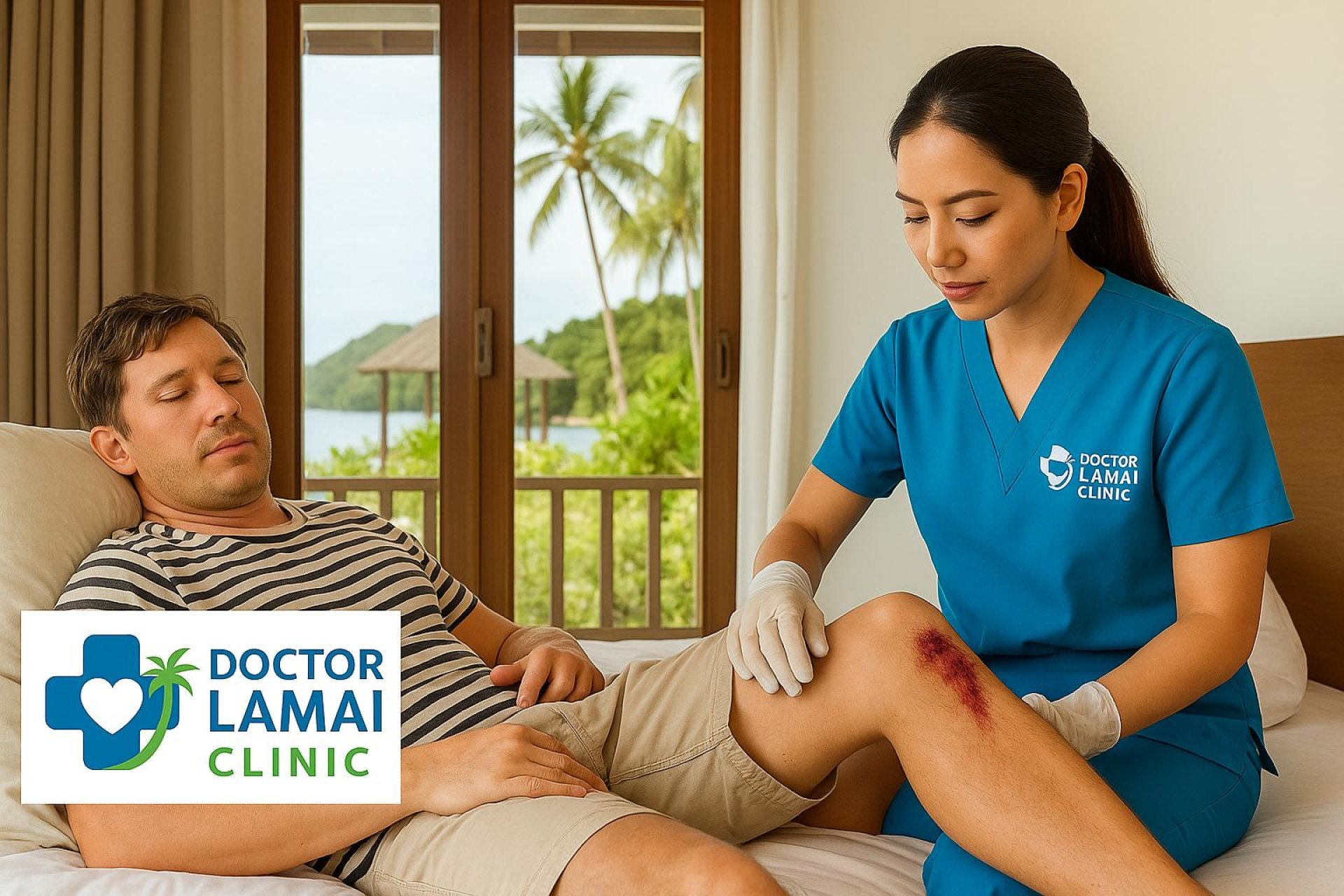
It is a story we hear almost every day. You are enjoying the ride of your life on a scooter through the coconut groves of Lamai, and then—gravel, slide, ouch. Or perhaps you were snorkeling off Silver Beach and brushed against sharp coral.
In your home country, a scrape or cut might heal with a simple band-aid. But in Koh Samui, the rules are different. The combination of high humidity, heat, and unfamiliar bacteria means that even a "minor" scratch can turn into a serious infection (often called a "tropical ulcer") within 24 hours.
If you are looking for a reliable clinic for wound dressing change Koh Samui, you need more than just iodine and gauze. You need sterile technique, professional assessment, and a team that understands how to manage injuries in a tropical climate.
Note: Travel insurance usually covers these costs if the accident was not due to reckless behavior (like driving without a license).
In a humid climate like Koh Samui, we usually recommend daily changes. If the wound is "weeping" (leaking fluid), it might need to be changed twice a day to prevent maceration (where the skin turns white and mushy).
2. Can I swim in the ocean if I have a waterproof bandage?
We strongly advise against it. "Waterproof" bandages often fail in saltwater or with sweat. The ocean contains bacteria (like Vibrio) that can cause severe infections in open wounds.
3. Does the clinic offer Tetanus shots?
Yes. If you haven't had a Tetanus booster in the last 5-10 years, we can administer one during your dressing change.
4. What is the "Samui Tattoo"?
This is the local slang for a burn on the inner calf caused by touching the hot exhaust pipe of a motorbike. These burns are deep and prone to infection. They require special non-stick mesh (paraffin gauze) to heal properly.
5. Do I need an appointment?
No. Doctor Lamai Clinic accepts walk-ins for wound care. The process is usually quick, taking about 15–30 minutes depending on the severity of the injury.
Keep it clean, keep it dry, and let Doctor Lamai Clinic handle the rest so you can get back to enjoying your holiday.
In your home country, a scrape or cut might heal with a simple band-aid. But in Koh Samui, the rules are different. The combination of high humidity, heat, and unfamiliar bacteria means that even a "minor" scratch can turn into a serious infection (often called a "tropical ulcer") within 24 hours.
If you are looking for a reliable clinic for wound dressing change Koh Samui, you need more than just iodine and gauze. You need sterile technique, professional assessment, and a team that understands how to manage injuries in a tropical climate.
Why You Can Trust Us
Our medical team at Doctor Lamai Clinic has treated thousands of "Samui Tattoos" (motorbike exhaust burns and road rash). We know exactly why wounds here heal slower than in Europe or the US. We don't just "cover it up"—we inspect for signs of necrosis, ensure all debris (like sand or asphalt) is fully removed, and use medical-grade sterile dressings that breathe in the humidity. We are your frontline defense against sepsis and ruined holidays.The Danger of "DIY" Wound Care in Thailand
Many travelers try to save money by buying supplies at a pharmacy and doing it themselves. Here is why that is risky in 2026:- Humidity & Bacteria: Bacteria thrive in warm, moist environments. If you use the wrong type of bandage that traps sweat, you create an incubator for infection.
- Debris: Road rash often embeds tiny particles of asphalt or gravel deep in the dermis. If these aren't professionally removed (debridement), the wound will not close.
- Tetanus Risk: The soil and road dust in tropical regions carry a higher risk of Tetanus. A pharmacist cannot give you a booster shot—but a clinic can.
Our Wound Care Services
At Doctor Lamai Clinic, we provide comprehensive care for the most common island injuries:- Daily Dressing Changes: Sterile cleaning and re-bandaging to keep the wound dry.
- Road Rash Cleaning: Gentle but thorough removal of dirt and gravel to prevent tattooing of the skin.
- Burn Treatment: Specialized cooling gels and non-stick dressings for exhaust pipe burns.
- Suture (Stitches) Removal: If you had surgery back home or at a main hospital, we can safely remove stitches or staples.
- Infection Control: Immediate prescription of antibiotics if we see redness, heat, or pus.
Recommended Clinic: Doctor Lamai Clinic
For fast, affordable, and English-speaking service, we are the top choice in the Lamai area. We welcome walk-ins for dressing changes every day.Clinic Contact Information
- Address: 124/254 Moo.3, Lamai beach, Koh Samui, Surat Thani, 84310
- Hours: Open Every Day from 9:00 AM to 7:00 PM
- Phone: +66 65 262 9396
- Email: doctorlamaiclinic@gmail.com
- Map: Find us on Google Maps
How Much Does a Dressing Change Cost?
Medical costs in Thailand are generally lower than in the West, but they vary based on the size of the wound.| Service | Estimated Cost (THB) | Notes |
| Small Wound Dressing | 300 – 600 THB | Simple cuts, small burns |
| Large/Deep Wound | 800 – 1,500 THB | Extensive road rash, requires debridement |
| Suture Removal | 500 – 1,000 THB | Includes cleaning and assessment |
| Doctor Consultation | 500 – 1,000 THB | Required if infection is suspected |
Note: Travel insurance usually covers these costs if the accident was not due to reckless behavior (like driving without a license).
5 Rules for Healing in Samui
While we handle the medical side, your behavior determines how fast you heal.- Stay Dry: Do not swim. No ocean, no pool, no waterfall. Water softens the scab and introduces bacteria.
- Avoid the Sun: New skin burns easily and can scar permanently (hyperpigmentation). Keep the wound covered.
- Eat Protein: Your body needs fuel to rebuild tissue. Eat plenty of chicken, eggs, or tofu.
- No Alcohol: Heavy drinking suppresses your immune system and slows down tissue repair.
- Come Back: If the bandage gets wet or dirty, do not wait for your appointment. Come in immediately for a change.
Frequently Asked Questions
1. How often should I change my dressing?In a humid climate like Koh Samui, we usually recommend daily changes. If the wound is "weeping" (leaking fluid), it might need to be changed twice a day to prevent maceration (where the skin turns white and mushy).
2. Can I swim in the ocean if I have a waterproof bandage?
We strongly advise against it. "Waterproof" bandages often fail in saltwater or with sweat. The ocean contains bacteria (like Vibrio) that can cause severe infections in open wounds.
3. Does the clinic offer Tetanus shots?
Yes. If you haven't had a Tetanus booster in the last 5-10 years, we can administer one during your dressing change.
4. What is the "Samui Tattoo"?
This is the local slang for a burn on the inner calf caused by touching the hot exhaust pipe of a motorbike. These burns are deep and prone to infection. They require special non-stick mesh (paraffin gauze) to heal properly.
5. Do I need an appointment?
No. Doctor Lamai Clinic accepts walk-ins for wound care. The process is usually quick, taking about 15–30 minutes depending on the severity of the injury.
Conclusion
A wound in paradise doesn't have to ruin your trip. The key is acting fast. Don't let a small cut fester into a fever. Whether you need a simple nurse for dressing change or treatment for a nasty road rash, professional care is just a short drive away.Keep it clean, keep it dry, and let Doctor Lamai Clinic handle the rest so you can get back to enjoying your holiday.
References
- Centers for Disease Control and Prevention (CDC): Travelers' Health - Tetanus. Information on why booster shots are critical after injuries abroad. https://www.cdc.gov/tetanus/about/prevention.html
- Wound Care Society: Management of Acute Wounds. Guidelines on cleaning and dressing traumatic injuries to prevent sepsis. https://woundcare-today.com/clinical/wound-types/acute-wounds
- DAN (Divers Alert Network): Marine Life Injuries. Specific advice on treating coral cuts and abrasions common in tropical waters. https://dan.org/health-medicine/health-resource/health-safety-guidelines/marine-life-injuries/