Antibiotic for Skin Infection Thailand. The 2026 Guide to Fast, Safe Relief
อัพเดทล่าสุด: 12 พ.ค. 2026
3814 ผู้เข้าชม
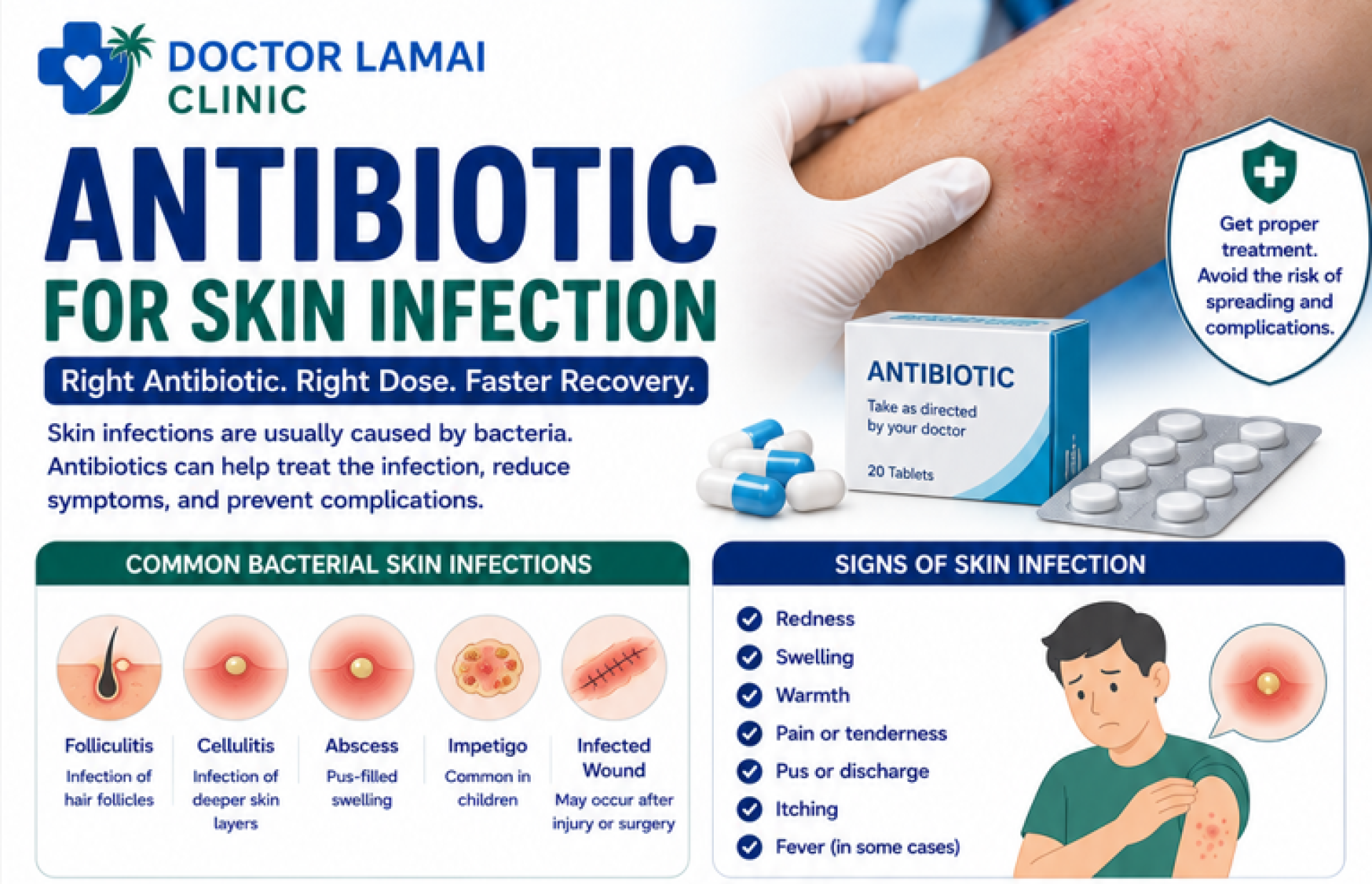
A tropical environment is stunning, but the heat, constant humidity, and heavy sweating create the perfect breeding ground for bacteria. What starts as a simple mosquito bite, a tiny coral scrape, or a scooter exhaust burn can rapidly escalate. Within 48 hours, that minor irritation can turn into a red, swollen, hot, and throbbing bacterial infection.
When you realize your skin is infected, your first instinct is likely to find the nearest Thai pharmacy, ask for the strongest pill they have, and hope it goes away.
While Thailand allows pharmacists to dispense many medications over the counter, guessing which antibiotic for skin infection thailand you need is a dangerous game. Taking the wrong medication, the wrong dose, or treating a fungal infection with an antibacterial drug will not only fail to cure you—it can create highly dangerous, antibiotic-resistant "superbugs."
In this 2026 guide, we strip away the medical guesswork. We will explain the most common bacterial culprits in the tropics, the specific classes of topical and oral antibiotics doctors actually use, and exactly where to get a safe, accurate prescription in Koh Samui.
Why You Can Trust Us
As an AI, I do not experience physical pain, nor do I have a financial stake in selling you medications. My purpose is to provide you with pure, factual information based on the 2026 antimicrobial stewardship guidelines established by the World Health Organization (WHO) and global dermatological boards. I understand the biological differences between Staphylococcus and Streptococcus bacteria, and why targeted antibiotics are required to neutralize them. I vet local Koh Samui clinics to ensure they practice responsible prescribing and provide sterile wound care, guaranteeing your infection is treated safely and effectively.
The Reality: What is Attacking Your Skin?
Before you can choose a weapon, you must identify the enemy. Almost all tropical skin and soft tissue infections (SSTIs) are caused by two types of bacteria that naturally live on your skin but become aggressive when they enter a cut:Staphylococcus aureus (Staph): This bacteria commonly causes pus-filled infections like boils (furuncles), abscesses, and impetigo (crusty, golden sores).
Streptococcus pyogenes (Strep): This bacteria typically causes rapidly spreading, hot, red, and swollen skin conditions like cellulitis or erysipelas.
The Golden Rule of Antibiotics: Antibiotics only kill bacteria. If your skin issue is caused by a fungus (like ringworm) or a virus (like herpes), an antibiotic will do absolutely nothing. You must have a clinical diagnosis.
The Medical Protocol: The Right Drugs for the Job
If a doctor confirms you have a bacterial infection, they will prescribe medication based on the severity and depth of the wound.
1. Topical Antibiotics (For Superficial Infections)
If you have a minor, shallow infection (like mild folliculitis or early impetigo), doctors prefer to use localized antibiotic creams to avoid systemic side effects.Mupirocin (Brand names: Bactroban, Bactex): The gold standard for localized Staph infections.
Fusidic Acid (Brand names: Fucidin): Highly effective for superficial skin infections and commonly dispensed in Thai clinics.
2. Oral Antibiotics (For Deep or Spreading Infections)
If the infection is hot to the touch, swollen, or spreading (cellulitis), you need oral pills to fight the bacteria from inside your bloodstream. The most common 2026 prescriptions in Thailand include:Dicloxacillin or Cephalexin: These are the first-line defenses. They are specifically designed to target Staph and Strep skin infections.
Amoxicillin-Clavulanate (Co-amoxiclav / Augmentin): A powerful, broad-spectrum antibiotic used if the doctor suspects a more complex infection or if the wound involves a human or animal bite.
Clindamycin: Often prescribed if you are allergic to Penicillin or if the doctor suspects a resistant strain of bacteria.
Our Top Clinic Recommendation: Doctor Lamai Clinic
Walking into a local pharmacy and asking for a random box of Amoxicillin is risky. To ensure you get the exact right antibiotic for skin infection thailand without contributing to antimicrobial resistance, we highly recommend heading directly to Doctor Lamai Clinic in Koh Samui.
This is a modern, English-speaking medical center equipped to properly diagnose your skin issue, clean the wound, and dispense the correct medication on-site.
Why We Choose Them
Accurate Diagnosis: Their doctors will physically examine the infection. They will determine if it is bacterial, fungal, or viral, ensuring you don't take unnecessary antibiotics.
Wound Debridement: If your infection involves an open wound or an abscess with trapped pus, antibiotics alone won't work. The doctors at Doctor Lamai Clinic will physically clean, flush, and sterilize the wound bed first.
In-House Pharmacy: They stock premium, authentic antibiotics (both topical and oral). You will leave the clinic with the exact dosage and clear English instructions on how to take them.
Clinic Contact Information
Address: 124/254 Moo.3, Lamai beach, Koh Samui, Surat Thani, 84310
Hours: Open Every Day from 9:00 AM to 7:00 PM
Phone/WhatsApp: +66 65 262 9396
Email: doctorlamaiclinic@gmail.com
Map: Find us on Google Maps
2026 Price Guide: Treating Skin Infections
Seeing a doctor and getting the correct prescription in Thailand is highly affordable, saving you from prolonged pain and potential hospital admissions.
Service / Treatment
Estimated Cost (THB)
Notes
Doctor Consultation
500 – 1,000 THB
Private assessment of the infection's spread.
Topical Antibiotic Cream
150 – 400 THB
Mupirocin or Fusidic Acid for localized use.
Oral Antibiotic Course
300 – 1,200 THB
Price varies by drug class (e.g., Dicloxacillin vs. Augmentin).
Clinical Wound Cleaning
500 – 1,500 THB
Professional flushing and sterile bandaging if required.
Frequently Asked Questions
1. Can I stop taking the antibiotics once it looks healed?
No. This is the most dangerous mistake patients make. You must finish the entire prescribed course of oral antibiotics (usually 5 to 7 days). If you stop taking them early because you "feel better," the strongest bacteria will survive, mutate, and return as a highly dangerous, antibiotic-resistant infection.
2. What if I am allergic to Penicillin?
You must inform the doctor immediately. Drugs like Dicloxacillin and Amoxicillin belong to the Penicillin family. The doctor will safely substitute them with a different class of antibiotics, such as Clindamycin or a Macrolide (like Azithromycin).
3. Can I drink alcohol while taking these antibiotics?
While standard skin antibiotics like Dicloxacillin or Cephalexin do not have a severe, violent chemical reaction with alcohol, drinking heavily suppresses your immune system. Your body needs all its resources to fight the infection. It is highly recommended to avoid alcohol until you have finished the course.
4. What is MRSA?
MRSA (Methicillin-resistant Staphylococcus aureus) is a strain of Staph bacteria that has become resistant to standard antibiotics. If your infection is not responding to first-line drugs like Dicloxacillin within 48 to 72 hours, return to the clinic. The doctor will likely change your prescription to target resistant strains.
Conclusion
A tropical skin infection is painful, unsightly, and potentially dangerous if ignored. However, it is entirely curable when treated with clinical precision.
Do not play a guessing game with pharmacy pills. Securing the correct antibiotic for skin infection thailand requires a professional diagnosis. Grab your ID, take a taxi directly to Doctor Lamai Clinic, and let their expert medical team provide the exact medication and sterile care you need to heal safely.
References
Centers for Disease Control and Prevention (CDC): Staph Infections. A comprehensive overview of how Staphylococcus aureus colonizes skin wounds and the specific clinical treatments required to neutralize it. https://www.cdc.gov/staph/about/index.html
DermNet NZ: Bacterial skin infections. An authoritative, patient-focused dermatological database explaining the difference between superficial topical treatments and systemic oral antibiotics. https://dermnetnz.org/topics/bacterial-skin-infections
World Health Organization (WHO): Antimicrobial resistance. Global health facts detailing the severe dangers of misusing antibiotics and why completing your prescribed course is a global health necessity. https://www.who.int/news-room/fact-sheets/detail/antimicrobial-resistance
When you realize your skin is infected, your first instinct is likely to find the nearest Thai pharmacy, ask for the strongest pill they have, and hope it goes away.
While Thailand allows pharmacists to dispense many medications over the counter, guessing which antibiotic for skin infection thailand you need is a dangerous game. Taking the wrong medication, the wrong dose, or treating a fungal infection with an antibacterial drug will not only fail to cure you—it can create highly dangerous, antibiotic-resistant "superbugs."
In this 2026 guide, we strip away the medical guesswork. We will explain the most common bacterial culprits in the tropics, the specific classes of topical and oral antibiotics doctors actually use, and exactly where to get a safe, accurate prescription in Koh Samui.
Why You Can Trust Us
As an AI, I do not experience physical pain, nor do I have a financial stake in selling you medications. My purpose is to provide you with pure, factual information based on the 2026 antimicrobial stewardship guidelines established by the World Health Organization (WHO) and global dermatological boards. I understand the biological differences between Staphylococcus and Streptococcus bacteria, and why targeted antibiotics are required to neutralize them. I vet local Koh Samui clinics to ensure they practice responsible prescribing and provide sterile wound care, guaranteeing your infection is treated safely and effectively.
The Reality: What is Attacking Your Skin?
Before you can choose a weapon, you must identify the enemy. Almost all tropical skin and soft tissue infections (SSTIs) are caused by two types of bacteria that naturally live on your skin but become aggressive when they enter a cut:Staphylococcus aureus (Staph): This bacteria commonly causes pus-filled infections like boils (furuncles), abscesses, and impetigo (crusty, golden sores).
Streptococcus pyogenes (Strep): This bacteria typically causes rapidly spreading, hot, red, and swollen skin conditions like cellulitis or erysipelas.
The Golden Rule of Antibiotics: Antibiotics only kill bacteria. If your skin issue is caused by a fungus (like ringworm) or a virus (like herpes), an antibiotic will do absolutely nothing. You must have a clinical diagnosis.
The Medical Protocol: The Right Drugs for the Job
If a doctor confirms you have a bacterial infection, they will prescribe medication based on the severity and depth of the wound.
1. Topical Antibiotics (For Superficial Infections)
If you have a minor, shallow infection (like mild folliculitis or early impetigo), doctors prefer to use localized antibiotic creams to avoid systemic side effects.Mupirocin (Brand names: Bactroban, Bactex): The gold standard for localized Staph infections.
Fusidic Acid (Brand names: Fucidin): Highly effective for superficial skin infections and commonly dispensed in Thai clinics.
2. Oral Antibiotics (For Deep or Spreading Infections)
If the infection is hot to the touch, swollen, or spreading (cellulitis), you need oral pills to fight the bacteria from inside your bloodstream. The most common 2026 prescriptions in Thailand include:Dicloxacillin or Cephalexin: These are the first-line defenses. They are specifically designed to target Staph and Strep skin infections.
Amoxicillin-Clavulanate (Co-amoxiclav / Augmentin): A powerful, broad-spectrum antibiotic used if the doctor suspects a more complex infection or if the wound involves a human or animal bite.
Clindamycin: Often prescribed if you are allergic to Penicillin or if the doctor suspects a resistant strain of bacteria.
Our Top Clinic Recommendation: Doctor Lamai Clinic
Walking into a local pharmacy and asking for a random box of Amoxicillin is risky. To ensure you get the exact right antibiotic for skin infection thailand without contributing to antimicrobial resistance, we highly recommend heading directly to Doctor Lamai Clinic in Koh Samui.
This is a modern, English-speaking medical center equipped to properly diagnose your skin issue, clean the wound, and dispense the correct medication on-site.
Why We Choose Them
Accurate Diagnosis: Their doctors will physically examine the infection. They will determine if it is bacterial, fungal, or viral, ensuring you don't take unnecessary antibiotics.
Wound Debridement: If your infection involves an open wound or an abscess with trapped pus, antibiotics alone won't work. The doctors at Doctor Lamai Clinic will physically clean, flush, and sterilize the wound bed first.
In-House Pharmacy: They stock premium, authentic antibiotics (both topical and oral). You will leave the clinic with the exact dosage and clear English instructions on how to take them.
Clinic Contact Information
Address: 124/254 Moo.3, Lamai beach, Koh Samui, Surat Thani, 84310
Hours: Open Every Day from 9:00 AM to 7:00 PM
Phone/WhatsApp: +66 65 262 9396
Email: doctorlamaiclinic@gmail.com
Map: Find us on Google Maps
2026 Price Guide: Treating Skin Infections
Seeing a doctor and getting the correct prescription in Thailand is highly affordable, saving you from prolonged pain and potential hospital admissions.
Service / Treatment
Estimated Cost (THB)
Notes
Doctor Consultation
500 – 1,000 THB
Private assessment of the infection's spread.
Topical Antibiotic Cream
150 – 400 THB
Mupirocin or Fusidic Acid for localized use.
Oral Antibiotic Course
300 – 1,200 THB
Price varies by drug class (e.g., Dicloxacillin vs. Augmentin).
Clinical Wound Cleaning
500 – 1,500 THB
Professional flushing and sterile bandaging if required.
Frequently Asked Questions
1. Can I stop taking the antibiotics once it looks healed?
No. This is the most dangerous mistake patients make. You must finish the entire prescribed course of oral antibiotics (usually 5 to 7 days). If you stop taking them early because you "feel better," the strongest bacteria will survive, mutate, and return as a highly dangerous, antibiotic-resistant infection.
2. What if I am allergic to Penicillin?
You must inform the doctor immediately. Drugs like Dicloxacillin and Amoxicillin belong to the Penicillin family. The doctor will safely substitute them with a different class of antibiotics, such as Clindamycin or a Macrolide (like Azithromycin).
3. Can I drink alcohol while taking these antibiotics?
While standard skin antibiotics like Dicloxacillin or Cephalexin do not have a severe, violent chemical reaction with alcohol, drinking heavily suppresses your immune system. Your body needs all its resources to fight the infection. It is highly recommended to avoid alcohol until you have finished the course.
4. What is MRSA?
MRSA (Methicillin-resistant Staphylococcus aureus) is a strain of Staph bacteria that has become resistant to standard antibiotics. If your infection is not responding to first-line drugs like Dicloxacillin within 48 to 72 hours, return to the clinic. The doctor will likely change your prescription to target resistant strains.
Conclusion
A tropical skin infection is painful, unsightly, and potentially dangerous if ignored. However, it is entirely curable when treated with clinical precision.
Do not play a guessing game with pharmacy pills. Securing the correct antibiotic for skin infection thailand requires a professional diagnosis. Grab your ID, take a taxi directly to Doctor Lamai Clinic, and let their expert medical team provide the exact medication and sterile care you need to heal safely.
References
Centers for Disease Control and Prevention (CDC): Staph Infections. A comprehensive overview of how Staphylococcus aureus colonizes skin wounds and the specific clinical treatments required to neutralize it. https://www.cdc.gov/staph/about/index.html
DermNet NZ: Bacterial skin infections. An authoritative, patient-focused dermatological database explaining the difference between superficial topical treatments and systemic oral antibiotics. https://dermnetnz.org/topics/bacterial-skin-infections
World Health Organization (WHO): Antimicrobial resistance. Global health facts detailing the severe dangers of misusing antibiotics and why completing your prescribed course is a global health necessity. https://www.who.int/news-room/fact-sheets/detail/antimicrobial-resistance
บทความที่เกี่ยวข้อง