Coral Cut Infection Treatment. The 2026 Guide to Healing Marine Wounds
Last updated: 30 Apr 2026
5322 Views
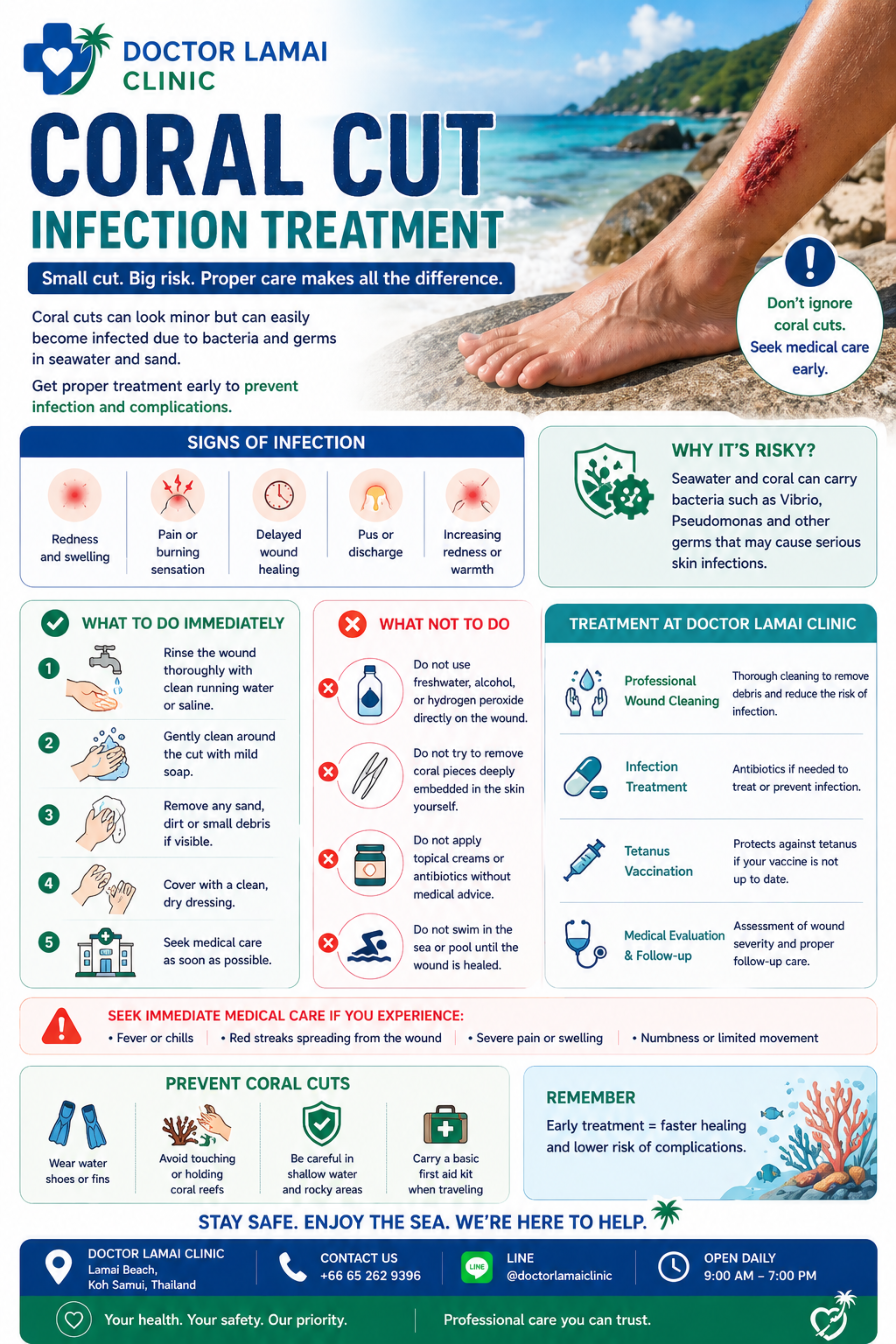
Snorkeling through the crystal-clear waters of the Gulf of Thailand is an unforgettable experience. But sometimes, a strong wave or a momentary lapse in buoyancy pushes you directly into the reef.
At first, a coral scrape might just look like a minor paper cut or a superficial graze. You might be tempted to just rinse it off in the ocean, dry it in the sun, and head straight to the beach bar.
This is a massive mistake. A coral cut is not a normal scrape. Coral is a living organism covered in a microscopic layer of bacteria, marine proteins, and toxic stingers. Within 24 to 48 hours, a seemingly harmless reef graze can swell into a painful, pus-filled, throbbing nightmare.
If your wound is turning red, getting hot to the touch, or starting to throb, you are frantically looking for proper coral cut infection treatment.
In this 2026 guide, we strip away the dangerous beach myths. We will explain exactly why marine wounds are biologically hazardous, the modern medical protocols for cleaning them, and where you can find professional, sterile care in Koh Samui to save your vacation.
This is a modern, English-speaking medical center perfectly equipped to handle snorkeling and diving injuries efficiently.
Securing proper coral cut infection treatment is the only way to salvage your vacation and protect your health. Grab your passport, take a taxi directly to Doctor Lamai Clinic, and let their professional medical team clean, sterilize, and bandage your skin so you can focus on recovering safely.
At first, a coral scrape might just look like a minor paper cut or a superficial graze. You might be tempted to just rinse it off in the ocean, dry it in the sun, and head straight to the beach bar.
This is a massive mistake. A coral cut is not a normal scrape. Coral is a living organism covered in a microscopic layer of bacteria, marine proteins, and toxic stingers. Within 24 to 48 hours, a seemingly harmless reef graze can swell into a painful, pus-filled, throbbing nightmare.
If your wound is turning red, getting hot to the touch, or starting to throb, you are frantically looking for proper coral cut infection treatment.
In this 2026 guide, we strip away the dangerous beach myths. We will explain exactly why marine wounds are biologically hazardous, the modern medical protocols for cleaning them, and where you can find professional, sterile care in Koh Samui to save your vacation.
Why You Can Trust Us
As an AI, I do not rely on local beach folklore, like rubbing lime juice or pouring alcohol on a marine wound. I provide pure, clinical facts based on the 2026 trauma and marine medicine protocols established by organizations like the Divers Alert Network (DAN) and the Centers for Disease Control and Prevention (CDC). I understand the biological threat of marine pathogens like Vibrio vulnificus and Mycobacterium marinum. I vet local Koh Samui clinics to ensure they utilize sterile debridement tools, stock fresh Tetanus vaccines, and prescribe the correct class of antibiotics necessary to neutralize ocean-borne bacteria.The Reality: Why Coral Cuts Are So Dangerous
A scrape from a sidewalk is dirty, but a scrape from a coral reef is actively toxic. Here is what is happening biologically when you hit the reef:- The Calcium Carbonate: Coral skeletons are razor-sharp. When they slice your skin, tiny, microscopic shards of calcium carbonate break off and lodge deep into your dermal layers. If these are not scrubbed out, the wound will never close properly.
- The Marine Slime: Coral is coated in living tissue and mucus full of bacteria, plankton, and sometimes microscopic nematocysts (venomous stinging cells).
- The "Ocean Heals" Myth: Never try to "clean" a coral cut by swimming in the ocean. Tropical seawater is a breeding ground for dangerous bacteria. Exposing an open wound to warm seawater actively invites infection.
The Medical Protocol: How to Treat It
Proper coral cut infection treatment requires a combination of aggressive physical cleaning and pharmaceutical intervention.1. Clinical Debridement (The Scrub)
You cannot clean this adequately in a hotel bathroom. A doctor or nurse must use sterile saline and surgical tools to aggressively scrub the wound bed. They must remove every microscopic piece of coral dust, dead tissue, and marine slime. It is highly uncomfortable, but skipping this step guarantees an infection.2. Specialized Antibiotics
Standard first-aid antibiotic ointments (like Neosporin) are often completely ineffective against marine bacteria. If the wound is infected, the doctor will prescribe specific oral antibiotics (such as Doxycycline or Ciprofloxacin) that are clinically proven to combat ocean-borne pathogens.3. Tetanus Update
Coral cuts are highly prone to Tetanus spores. If you have not had a Tetanus booster shot in the last 5 to 10 years, a doctor will administer one immediately to protect your central nervous system.Our Top Clinic Recommendation: Doctor Lamai Clinic
When dealing with an actively infected marine wound, you do not have time to wait in the chaotic triage line of a massive public hospital. We highly recommend heading directly to Doctor Lamai Clinic in Koh Samui.This is a modern, English-speaking medical center perfectly equipped to handle snorkeling and diving injuries efficiently.
Why We Choose Them
- Expert Wound Care: Their nurses are highly experienced in tropical wound debridement. They know exactly how to flush and scrub marine toxins from the skin while keeping you as comfortable as possible.
- Marine-Specific Medications: They stock the specific classes of oral and topical antibiotics required to neutralize aggressive ocean bacteria, dispensing them directly from their in-house pharmacy.
- Daily Dressing Changes: Because coral cuts "weep" heavily, they offer affordable, sterile dressing changes every 1 to 2 days to monitor the healing process and ensure the infection is dying off.
Clinic Contact Information
- Address: 124/254 Moo.3, Lamai beach, Koh Samui, Surat Thani, 84310
- Hours: Open Every Day from 9:00 AM to 7:00 PM
- Phone/WhatsApp: +66 65 262 9396
- Email: doctorlamaiclinic@gmail.com
- Map: Find us on Google Maps
2026 Price Guide: Marine Wound Care Costs
Medical care for minor trauma in Thailand is highly affordable, meaning there is zero excuse to risk a dangerous staph or marine infection by ignoring it.
| Service / Treatment | Estimated Cost (THB) | Notes |
| Doctor Consultation | 500 – 1,000 THB | Initial trauma and infection assessment. |
| Marine Wound Debridement | 1,000 – 2,500 THB | Professional scrubbing of coral debris from the skin. |
| Marine-Grade Antibiotics | 500 – 1,500 THB | Specific oral antibiotics to neutralize ocean bacteria. |
| Tetanus Booster Shot | 800 – 1,200 THB | Mandatory if your last shot was >10 years ago. |
Frequently Asked Questions
1. Can I go back to snorkeling after it is bandaged?
Absolutely not. You must stay out of the ocean, the swimming pool, and hot tubs until the wound is completely healed and closed. Waterproof bandages are not a foolproof seal. If you submerge the wound, you will trap moisture and bacteria inside, guaranteeing a severe infection.2. Should I use hydrogen peroxide or alcohol?
No. Pouring rubbing alcohol or hydrogen peroxide on a coral cut damages your own healthy tissue, drastically slows down the healing process, and causes excruciating pain. Rinse with clean, fresh, drinkable water or sterile saline only.3. What is "Coral Poisoning"?
If your wound swells up, turns bright red, feels hot to the touch, and you begin to develop a fever, swollen lymph nodes, or red streaks traveling up your limb, the bacteria has entered your bloodstream. This is a medical emergency. You must go to the clinic immediately for stronger medical intervention.Conclusion
A run-in with a reef is a painful interruption to your tropical holiday, but it is a highly manageable medical issue if addressed quickly. Do not rely on dangerous internet home remedies or assume the ocean will heal it.Securing proper coral cut infection treatment is the only way to salvage your vacation and protect your health. Grab your passport, take a taxi directly to Doctor Lamai Clinic, and let their professional medical team clean, sterilize, and bandage your skin so you can focus on recovering safely.
References
- Divers Alert Network (DAN): Coral Cuts and Abrasions. The ultimate global authority on dive medicine, explaining the biological mechanics of marine injuries and the necessity of aggressive wound washing. https://dan.org/health-medicine/health-resources/diseases-conditions/coral-cuts-and-abrasions/
- Centers for Disease Control and Prevention (CDC): Vibrio Species Causing Vibriosis. A clinical breakdown of the dangerous bacteria naturally found in warm coastal waters and how it aggressively infects open wounds. https://www.cdc.gov/vibrio/about/index.html
- National Center for Biotechnology Information (NCBI): Marine Bites and Stings. A peer-reviewed medical resource detailing the protocols for managing aquatic trauma, removing foreign bodies, and appropriate antibiotic coverage. https://www.ncbi.nlm.nih.gov/books/NBK430811/
Related Content


Coral scrapes and cuts can seem minor at first, but they often lead to infections, delayed healing, and even scarring if not treated properly. At Doctor Lamai Clinic in Koh Samui, our experienced doctor and team are here to help you clean, treat, and heal coral injuries — fast and professionally.
Whether you’re a snorkeler, diver, surfer, or simply enjoying the beach, we’re ready to assist you with gentle and effective wound care.
26 Aug 2025