Chlamydia and Gonorrhea Testing in Koh Samui: What You Need to Know
If you are looking for chlamydia and gonorrhea testing in Koh Samui, you may have questions about where to get tested, what type of sample is needed, whether you need symptoms to get tested, how soon after exposure you should test, and how long the results take.
Chlamydia and gonorrhea are common sexually transmitted infections (STIs). Both infections can sometimes cause noticeable symptoms, but many people have no symptoms at all. This means that someone can have an infection without realizing it and potentially pass it to a sexual partner.
If you are concerned about a recent sexual exposure, have symptoms, or simply want sexual health screening, speaking with a healthcare professional can help you choose the appropriate test.
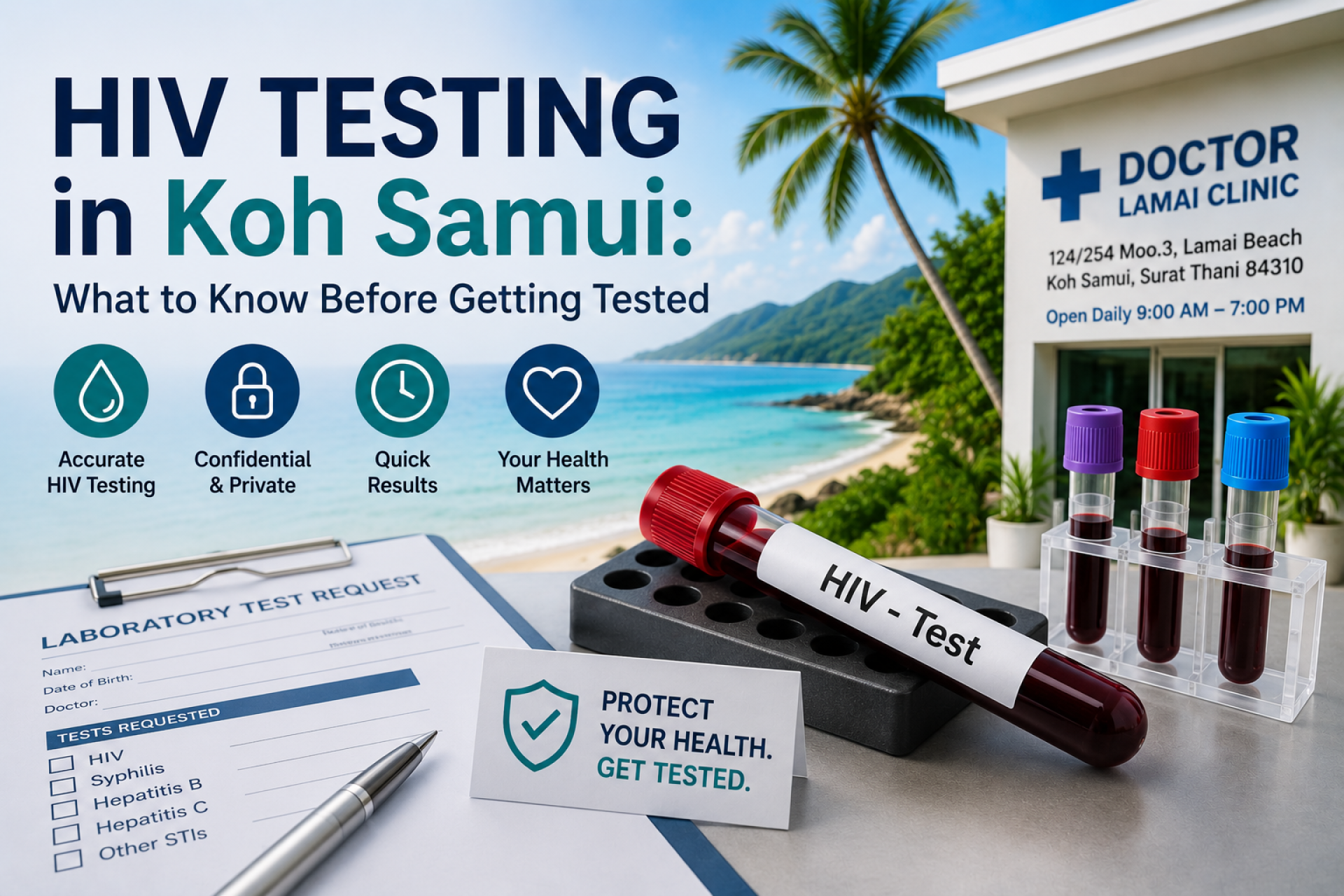
Doctor Lamai Clinic in Lamai Beach, Koh Samui, provides doctor consultations and laboratory testing for patients who need medical assessment and testing.
Where Can I Get Chlamydia and Gonorrhea Testing in Koh Samui?
If you are searching for chlamydia testing near me, gonorrhea testing near me, or an STD test in Koh Samui, you can contact a medical clinic that provides laboratory testing and medical consultations.
Doctor Lamai Clinic is located at:
124/254 Moo.3, Lamai Beach, Koh Samui, Surat Thani 84310, Thailand
The clinic is open every day from 9:00 AM to 7:00 PM.
Doctor Lamai Clinic provides medical consultations, blood and laboratory tests, vaccinations, wound care, IV drip services, and hotel and villa doctor visits.
If you specifically want chlamydia or gonorrhea testing, contact the clinic before visiting to confirm the available testing options, sample requirements, current pricing, and expected turnaround time.
What Are Chlamydia and Gonorrhea?
Chlamydia and gonorrhea are bacterial sexually transmitted infections.
Chlamydia is caused by the bacterium Chlamydia trachomatis. It can infect the genitals, rectum, and throat depending on the type of sexual contact.
Gonorrhea is caused by the bacterium Neisseria gonorrhoeae. It can affect the genitals, rectum, and throat and can sometimes cause eye infection.
Both infections are treatable with appropriate antibiotics. However, treatment should be based on professional medical advice and, when appropriate, laboratory testing.
Leaving an infection untreated can lead to complications, which is why appropriate diagnosis and treatment are important.
Can You Have Chlamydia or Gonorrhea Without Symptoms?
Yes.
Many people with chlamydia have no symptoms. Gonorrhea can also be asymptomatic, particularly in some infections involving the throat or other sites.
When symptoms do occur, they can vary depending on the infection and the part of the body affected.
Possible symptoms may include:
- Burning or pain when urinating
- Unusual genital discharge
- Pelvic or lower abdominal pain
- Testicular pain or swelling
- Rectal pain or discharge
- Sore throat after oral sexual exposure
- Bleeding between periods
- Pain during sex
These symptoms can also have causes other than chlamydia or gonorrhea, so symptoms alone cannot confirm an STI.
If you have symptoms or believe you may have been exposed, testing can help determine what is causing the problem.
How Are Chlamydia and Gonorrhea Tested?
Chlamydia and gonorrhea are commonly tested using a NAAT (nucleic acid amplification test).
Depending on the person's anatomy and exposure, testing may involve:
- A urine sample
- A genital swab
- A vaginal swab
- A rectal swab
- A throat swab
The appropriate sample depends on where exposure occurred and what symptoms you have.
For example, if you had oral sexual contact, tell the healthcare professional. Testing may need to include the throat rather than relying only on a urine sample.
Similarly, after anal exposure, rectal testing may be appropriate.
This is why providing honest information about sexual contact helps the healthcare professional recommend the right testing sites.
Is a Blood Test Used for Chlamydia and Gonorrhea?
Chlamydia and gonorrhea are generally diagnosed using samples from the potentially infected site rather than a routine blood test.
Urine or swab-based NAAT testing is commonly used.
This is important if you are searching for a blood test for STD near me and specifically want to check for chlamydia or gonorrhea. A blood test is not generally the standard diagnostic test for these two infections.
Other STIs, such as HIV and syphilis, are commonly evaluated with blood tests.
If you are concerned about several STIs, a healthcare professional can help determine which combination of blood, urine, and swab tests may be appropriate.
When Should You Test for Chlamydia and Gonorrhea After Exposure?
The timing of STI testing matters.
If you test too soon after a possible exposure, the infection may not yet be detectable. The appropriate timing can depend on the infection, test method, and individual circumstances.
If you recently had a possible exposure, tell the healthcare professional:
- When the exposure happened
- What type of sexual contact occurred
- Whether you used protection
- Whether you have symptoms
- Whether you have had previous STI testing
A healthcare professional can then advise you about the most appropriate time for testing and whether repeat testing may be needed.
If you have symptoms, do not delay seeking medical advice simply because you are unsure whether enough time has passed.
Read Also: HIV Testing in Koh Samui: What to Know Before Getting Tested
Who Should Get Tested for Chlamydia and Gonorrhea?
Testing recommendations depend on individual risk factors, age, sexual history, symptoms, and pregnancy status.
You may want to discuss testing with a healthcare professional if:
- You had sex without a condom.
- A condom broke or slipped.
- You have a new sexual partner.
- Your partner has been diagnosed with chlamydia or gonorrhea.
- You have symptoms associated with an STI.
- You have multiple sexual partners.
- You have another sexually transmitted infection.
- You are pregnant and have questions about STI screening.
- You are concerned about a recent exposure.
Regular STI screening can also be appropriate for some people even when they do not have symptoms.
What Happens During Chlamydia or Gonorrhea Testing?
The testing process is usually straightforward.
First, a healthcare professional may ask about your symptoms and sexual exposure. This information helps determine which testing sites and sample types may be appropriate.
Depending on your situation, you may provide a urine sample or have a swab collected.
You should not feel embarrassed about answering questions about sexual activity. These questions are part of routine sexual health assessment and can help ensure that the correct tests are performed.
If you are uncomfortable discussing your symptoms, remember that accurate information can make the testing process more useful and reduce the chance of testing the wrong site.
How Long Do Chlamydia and Gonorrhea Test Results Take?
The turnaround time depends on the testing method and laboratory processing.
Doctor Lamai Clinic provides blood and laboratory testing, and many laboratory results may be available within approximately 30 minutes, depending on the test.
However, not every STI test has the same turnaround time. Some samples may need additional laboratory processing.
If you are visiting Koh Samui for a short holiday and need results within a particular timeframe, ask the clinic about the expected result time for the specific chlamydia or gonorrhea test before testing.
How Much Does Chlamydia and Gonorrhea Testing Cost in Koh Samui?
The cost depends on the tests required, laboratory processing, and whether you need one test or multiple STI tests.
A chlamydia test and gonorrhea test may be performed together, but the total price can vary between clinics and testing services.
If you are also concerned about HIV, syphilis, hepatitis, or another STI, additional tests may affect the total cost.
Instead of assuming that one package includes every STI, ask the clinic exactly which infections are included.
Before testing, you can ask:
- How much does the test cost?
- Does the price include both chlamydia and gonorrhea?
- Which sample will be collected?
- Are additional STI tests available?
- Is a doctor consultation included?
- How long will the results take?
Can Tourists Get Chlamydia and Gonorrhea Testing in Koh Samui?
Yes. Tourists staying in Koh Samui can seek medical advice and STI testing.
If you are staying around Lamai Beach, Chaweng, or another area of the island, you can contact a local medical clinic about available testing.
Travelers may seek testing because of a recent sexual exposure, symptoms, a partner's diagnosis, or simply because they want reassurance about their sexual health.
If you have a limited amount of time before leaving Thailand, tell the healthcare professional about your travel schedule. They can explain available testing and whether follow-up may be required.
What Happens If the Test Is Positive?
If you test positive for chlamydia or gonorrhea, do not panic.
Both infections are bacterial and can be treated with appropriate antibiotics. However, treatment should be prescribed by a qualified healthcare professional because the recommended treatment can depend on the infection, location, resistance patterns, allergies, pregnancy status, and other medical factors.
If you receive a positive result, the healthcare professional can explain the appropriate treatment and whether your sexual partner or partners should also be tested or treated.
It is also important to follow the treatment instructions carefully and avoid sexual contact as advised by your healthcare provider.
Do not use leftover antibiotics or medication prescribed for someone else.
Can Chlamydia or Gonorrhea Come Back After Treatment?
Yes.
A person can become infected again after successful treatment if they are exposed to an infected partner.
This is different from the original infection simply coming back. Reinfection can happen if a sexual partner has not been treated or if there is a new exposure.
Following medical advice about partner testing and treatment can help reduce the risk of reinfection.
How Can You Reduce the Risk of Chlamydia and Gonorrhea?
No prevention method eliminates every STI risk, but several steps can reduce the chance of infection.
These include:
- Using condoms correctly and consistently.
- Having open conversations about STI testing with sexual partners.
- Getting tested when recommended.
- Avoiding sexual contact when you or your partner has symptoms or is undergoing treatment as advised.
- Ensuring partners receive appropriate treatment when an STI is diagnosed.
Regular testing is particularly useful for people who have ongoing risk factors.
Frequently Asked Questions
Where can I get a chlamydia test in Koh Samui?
You can contact a medical clinic that provides STI and laboratory testing. Doctor Lamai Clinic in Lamai Beach provides doctor consultations and laboratory services. Contact the clinic to confirm current testing availability.
Where can I get a gonorrhea test in Koh Samui?
Gonorrhea testing may be available through medical clinics and laboratories in Koh Samui. Doctor Lamai Clinic provides medical consultations and laboratory testing. Ask the clinic about the specific gonorrhea test and sample required.
Can chlamydia be detected with a blood test?
Routine diagnosis of chlamydia generally uses urine or swab-based testing rather than a standard blood test.
Can gonorrhea be detected with a blood test?
Routine genital, rectal, or throat gonorrhea testing generally uses samples from the potentially infected site, such as urine or swabs, rather than a standard blood test.
Can I have chlamydia without symptoms?
Yes. Chlamydia can occur without noticeable symptoms. Testing may therefore be important after certain exposures even when you feel healthy.
Can I have gonorrhea without symptoms?
Yes. Some people with gonorrhea have no noticeable symptoms. A healthcare professional can advise whether testing is appropriate based on your circumstances.
How soon after sex can I test for chlamydia and gonorrhea?
Testing too soon after exposure may not reliably detect an infection. The appropriate timing depends on the circumstances and test used. Tell the healthcare professional when the exposure occurred so they can advise you.
How much does chlamydia and gonorrhea testing cost in Koh Samui?
The price depends on the tests required, laboratory services, and whether a consultation or additional STI tests are needed. Contact the clinic for current pricing.
Can tourists get STI testing in Koh Samui?
Yes. Tourists can seek medical consultations and STI testing in Koh Samui. Contact the clinic before visiting to confirm availability and testing requirements.
Conclusion
If you are looking for chlamydia and gonorrhea testing in Koh Samui, professional testing is the best way to determine whether you have one of these infections. Both infections can occur without obvious symptoms, so feeling healthy does not always mean that an infection is absent.
Chlamydia and gonorrhea are generally tested using urine or swab-based methods rather than routine blood tests. The appropriate sample depends on the infection being considered and the site of possible exposure.
If you recently had unprotected sex, a condom failure, a new sexual partner, or another potential exposure, speak with a healthcare professional about the right testing time and method.
For people staying in or around Lamai Beach, Doctor Lamai Clinic provides doctor consultations and laboratory testing. Contact the clinic to ask about chlamydia and gonorrhea testing, current prices, sample requirements, and expected result times.
```