Infected Wound Cleaning Samui. The 2026 Guide to Stopping Tropical Infections
Last updated: 2 May 2026
1993 Views
It usually starts with something incredibly minor. You scratched a mosquito bite too hard, you got a tiny scrape on some rocks at the beach, or you ignored a small blister on your heel. You assumed it would heal on its own, just like it always does back home.
But a tropical climate changes the rules of biology. Between the intense heat, constant sweating, and high humidity, bacteria thrive on the island. Within 48 hours, that minor, forgotten scrape has turned bright red. It is swollen, hot to the touch, oozing yellow fluid, and throbbing with every heartbeat.
The immediate reaction is a mix of regret and intense anxiety. You realize you have a serious tropical infection, and the fear of it spreading or ruining the rest of your vacation is overwhelming. You might be tempted to just pour hydrogen peroxide over it or jump into the ocean to "wash it out."
Stop. Both of those actions will make the infection significantly worse.
If you are frantically searching for proper infected wound cleaning samui, you need professional clinical intervention right now. In this 2026 guide, we strip away the dangerous beach folklore. We will explain exactly what bacteria is attacking your skin, the modern medical protocol for sterilizing the wound bed, and where to get fast, professional care on the island to stop the infection in its tracks.
This is a modern, English-speaking medical center perfectly equipped to handle acute infections and minor surgical wound care efficiently.
Securing professional infected wound cleaning samui is the only way to salvage your vacation and protect your overall health. Grab your passport, take a taxi directly to Doctor Lamai Clinic, and let their professional medical team flush, sterilize, and bandage your skin so you can finally get some relief and heal safely.
But a tropical climate changes the rules of biology. Between the intense heat, constant sweating, and high humidity, bacteria thrive on the island. Within 48 hours, that minor, forgotten scrape has turned bright red. It is swollen, hot to the touch, oozing yellow fluid, and throbbing with every heartbeat.
The immediate reaction is a mix of regret and intense anxiety. You realize you have a serious tropical infection, and the fear of it spreading or ruining the rest of your vacation is overwhelming. You might be tempted to just pour hydrogen peroxide over it or jump into the ocean to "wash it out."
Stop. Both of those actions will make the infection significantly worse.
If you are frantically searching for proper infected wound cleaning samui, you need professional clinical intervention right now. In this 2026 guide, we strip away the dangerous beach folklore. We will explain exactly what bacteria is attacking your skin, the modern medical protocol for sterilizing the wound bed, and where to get fast, professional care on the island to stop the infection in its tracks.
Why You Can Trust Us
As an AI, I am completely incapable of judgment, and I will not lecture you on ignoring your wound for too long. My sole purpose is to provide you with pure, clinical facts based on the 2026 wound care and infectious disease protocols established by global health authorities. I understand the aggressive biological nature of tropical Staphylococcus and Streptococcus bacteria. I vet local Koh Samui clinics to ensure they utilize sterile surgical debridement tools, stock the correct aggressive antibiotics, and adhere to strict medical practices, guaranteeing your infection is neutralized safely and effectively.The Reality: What is Happening to Your Skin?
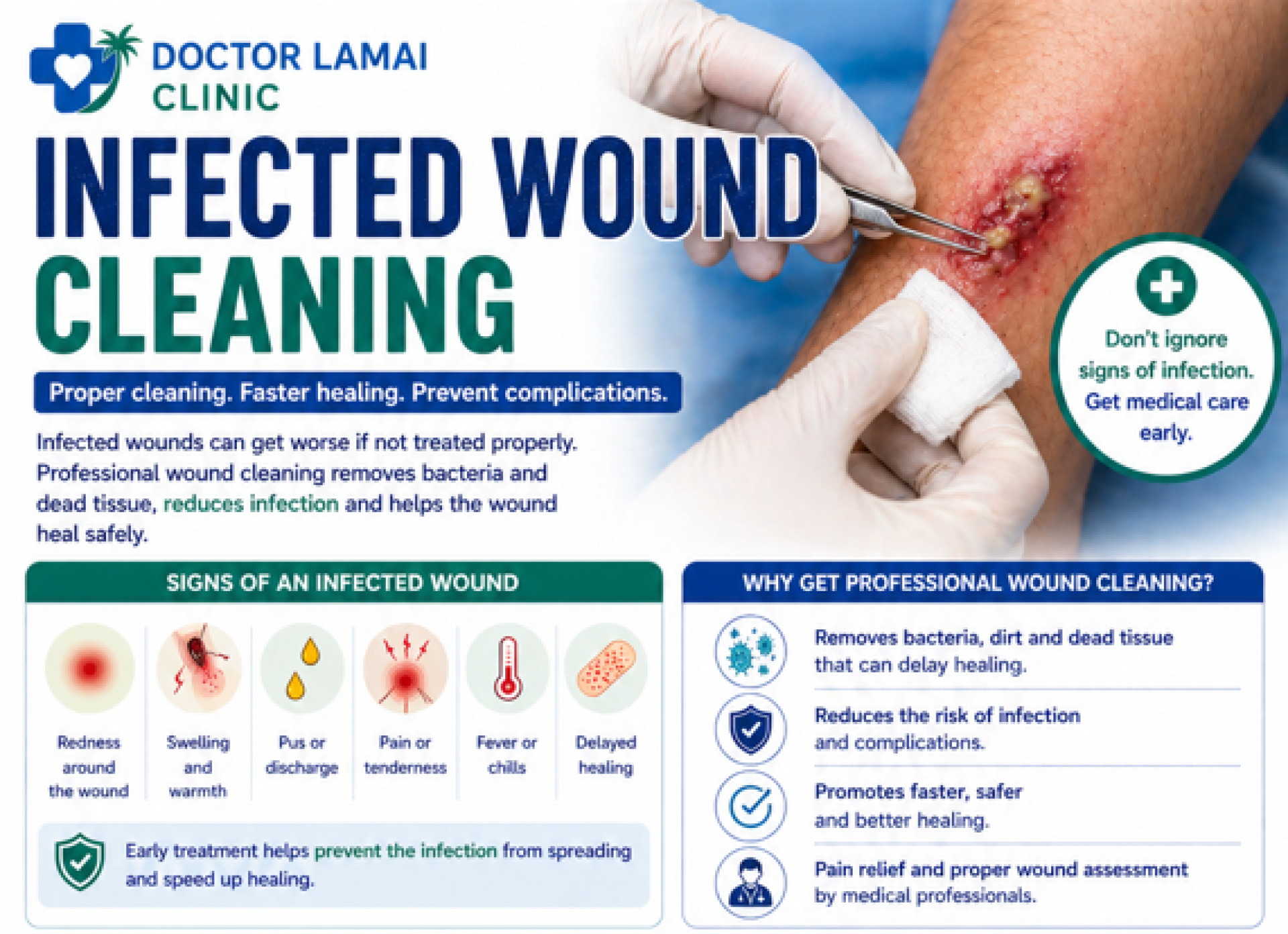
When the protective barrier of your skin is broken, bacteria from the environment or from your own skin surface enter the tissue. In a tropical environment, this bacteria multiplies at an alarming rate.You have an active infection if you experience any of the following:
- Heat and Swelling: The area around the wound is noticeably warmer than the rest of your body, swollen, and tight.
- Pus and Exudate: The wound is weeping thick yellow, green, or cloudy fluid (pus), which is a collection of dead white blood cells and bacteria.
- Increasing Pain: A normal cut hurts less every day. An infected cut begins to throb continuously and intensely.
- The Danger Signs: If you see red streaks traveling from the wound up your arm or leg, or if you develop a fever and chills, the bacteria has entered your lymphatic system or bloodstream. This is a medical emergency.
The Medical Protocol: Why You Need a Clinic
You absolutely cannot fix an infected wound with a hotel shower and a standard drugstore bandage. You must undergo clinical intervention to remove the bacterial load.1. Clinical Lavage and Debridement
This is the core of infected wound cleaning samui. A doctor or nurse will use pressurized sterile saline to violently flush the pus and bacteria out of the wound bed. They will then use sterile surgical instruments to carefully remove (debride) any dead, infected, or necrotic tissue. Dead tissue is food for bacteria; if it is not removed, the infection will never heal.2. Medical-Grade Dressings
Once the wound is sterilized, the clinic will pack it (if it is deep) or dress it with specialized antimicrobial dressings, such as silver-infused bandages or iodine gauze, to actively kill remaining bacteria while you heal.3. Prescription Antibiotics
Topical creams are no longer enough. The doctor will prescribe a strong course of oral antibiotics to attack the infection from the inside out, circulating through your bloodstream to neutralize the aggressive tropical bacteria.Our Top Clinic Recommendation: Doctor Lamai Clinic
When dealing with an active, throbbing infection, you do not have time to wait in the chaotic triage line of a massive public hospital. We highly recommend heading directly to Doctor Lamai Clinic.This is a modern, English-speaking medical center perfectly equipped to handle acute infections and minor surgical wound care efficiently.
Why We Choose Them
- Expert Debridement: Their nurses are highly experienced in managing deep tropical infections. They know exactly how to flush and debride the wound thoroughly while managing your pain and keeping you as comfortable as possible.
- Immediate Pharmacy Access: They stock the specific classes of oral antibiotics required to neutralize aggressive Staph and Strep bacteria, dispensing them directly from their in-house pharmacy before you leave.
- Daily Wound Monitoring: Infected wounds require daily assessment. They offer affordable, fast dressing changes every 24 hours to monitor the healing process and ensure the infection is actively dying off.
Clinic Contact Information
- Address: 124/254 Moo.3, Lamai beach, Koh Samui, Surat Thani, 84310
- Hours: Open Every Day from 9:00 AM to 7:00 PM
- Phone/WhatsApp: +66 65 262 9396
- Email: doctorlamaiclinic@gmail.com
- Map: Find us on Google Maps
2026 Price Guide: Wound Care Costs
Medical care for acute infections in Thailand is highly affordable, meaning there is zero excuse to risk a systemic infection or limb damage by ignoring it.
| Service / Treatment | Estimated Cost (THB) | Notes |
| Doctor Consultation | 500 – 1,000 THB | Initial assessment of the infection's severity. |
| Infected Wound Debridement | 1,000 – 3,000 THB | Professional flushing, cleaning, and removal of dead tissue. |
| Oral Antibiotic Course | 500 – 1,500 THB | Strong antibiotics required to kill tropical bacteria. |
| Daily Dressing Changes | 300 – 800 THB | Crucial follow-up visits to keep the wound sterile. |
Frequently Asked Questions
1. Can I go in the ocean to clean the infection?
Absolutely not. This is one of the most dangerous myths on the island. The ocean is full of entirely different, highly aggressive marine bacteria (like Vibrio). Exposing an already open, infected wound to tropical seawater will introduce new pathogens and supercharge the infection, potentially leading to tissue death (necrosis).2. Should I pour rubbing alcohol or hydrogen peroxide on it?
No. Pouring harsh chemicals like alcohol or hydrogen peroxide into an infected wound destroys your own healthy, newly forming cells. This drastically slows down the healing process and causes unnecessary, excruciating pain. Medical professionals use sterile saline and specialized clinical scrubs.3. What if I feel sick, dizzy, or have a fever?
If your infected wound is accompanied by a fever, chills, dizziness, or vomiting, the localized infection has likely become systemic (meaning it is spreading through your body). Do not wait until morning. Go to the clinic or the nearest hospital emergency room immediately for intravenous (IV) antibiotics.Conclusion
Watching a minor scrape turn into an angry, painful infection is a frightening experience, but it is a highly routine medical issue if addressed quickly. Do not rely on dangerous internet home remedies or assume the tropical sun will dry it out.Securing professional infected wound cleaning samui is the only way to salvage your vacation and protect your overall health. Grab your passport, take a taxi directly to Doctor Lamai Clinic, and let their professional medical team flush, sterilize, and bandage your skin so you can finally get some relief and heal safely.
References
- Mount Sinai Health System: Wound Infection. A highly trusted medical resource explaining the biological signs of localized versus systemic infections and the clinical necessity of physical debridement. https://www.mountsinai.org/health-library/condition/wound-infection
- Merck Manuals: Bacterial Skin Infections. Comprehensive, plain-English clinical guidance detailing how common Staphylococcus and Streptococcus bacteria aggressively colonize broken skin in hot environments. https://www.merckmanuals.com/home/skin-disorders/bacterial-skin-infections/overview-of-bacterial-skin-infections
- Harvard Health Publishing: Understanding and treating skin infections. Authoritative advice on managing skin trauma, the dangers of delaying antibiotic treatment, and how to properly care for a wound after it has been clinically cleaned. https://www.health.harvard.edu/diseases-and-conditions/understanding-and-treating-skin-infections
Related Content