Sea Urchin Sting Treatment Koh Samui. The 2026 Guide to Marine First Aid
Last updated: 30 Apr 2026
6230 Views
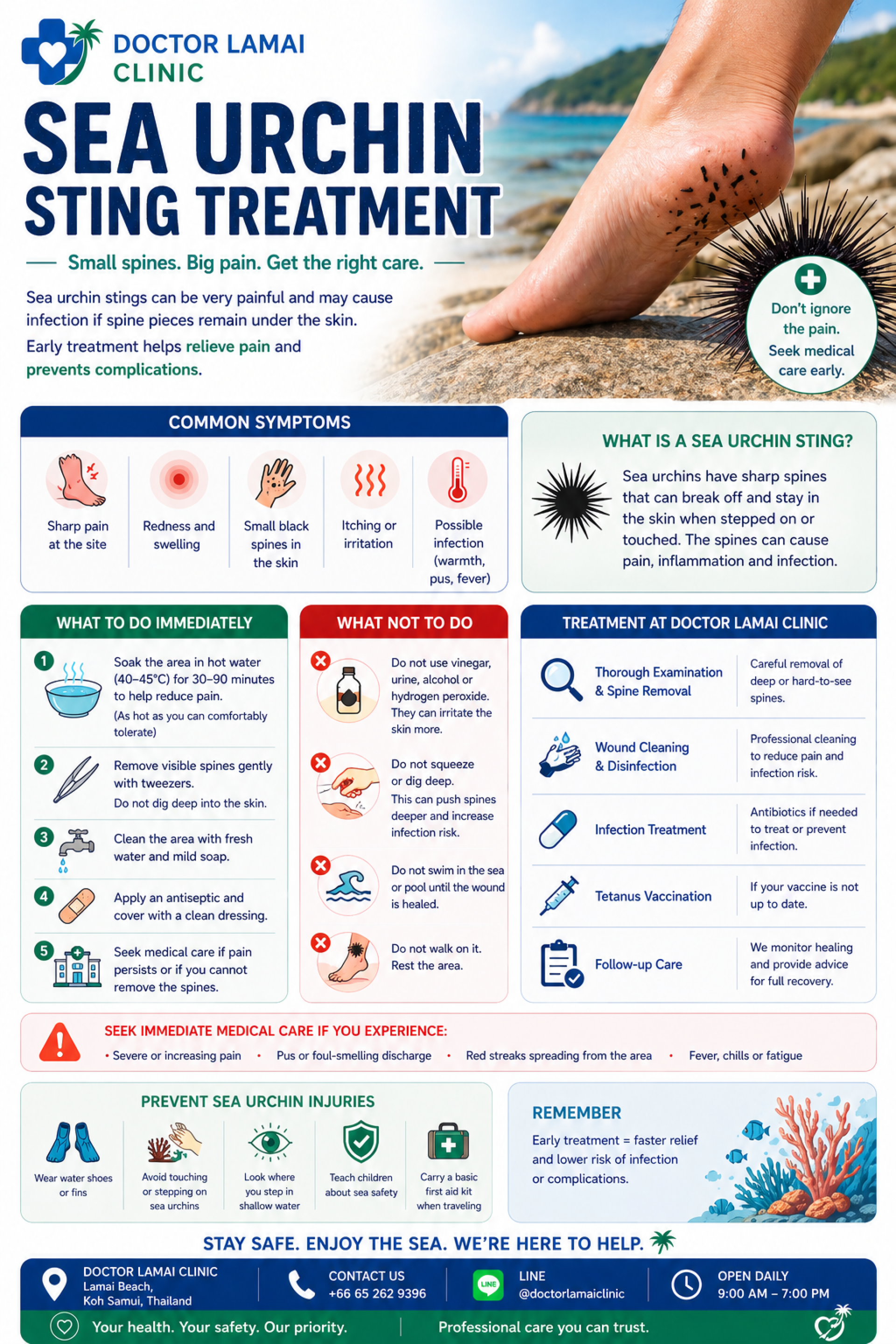
You are enjoying a beautiful afternoon wading through the warm, crystal-clear shallows of Koh Samui. Suddenly, you take a step and feel an intense, sharp, burning puncture in the bottom of your foot. You hobble out of the water, look at your heel, and see a cluster of terrifying black dots embedded deep under your skin.
The immediate reaction is usually sheer panic. The pain is intense, your foot is throbbing, and local beachgoers might be shouting conflicting advice at you—ranging from pouring vinegar on it to the classic (and entirely unhelpful) myth of urinating on the wound.
Take a deep breath and sit down. While incredibly painful, a sea urchin sting is rarely life-threatening. However, dealing with it improperly can turn a minor marine injury into a chronic, months-long nightmare of deep tissue infections.
If you are frantically searching for sea urchin sting treatment koh samui, you need the right biological and medical protocols right now. In this 2026 guide, we strip away the beach folklore. We will explain exactly what those black spines are doing to your body, the immediate first aid steps to stop the venom, and where to find a professional clinic to safely extract them.
Do not dig with a needle: Trying to perform "bathroom surgery" with unsterilized tweezers or needles will cause the spines to crumble, pushing them deeper and virtually guaranteeing a bacterial infection.
This is a modern, English-speaking medical center equipped to handle aquatic trauma with speed and professionalism.
Securing proper sea urchin sting treatment koh samui is fast, safe, and easily accessible. Soak your foot in hot water to kill the pain, grab your passport, and head directly to Doctor Lamai Clinic to have the spines professionally extracted so you can get back on your feet and enjoy the rest of your 2026 holiday.
You have just stepped on a sea urchin.
The immediate reaction is usually sheer panic. The pain is intense, your foot is throbbing, and local beachgoers might be shouting conflicting advice at you—ranging from pouring vinegar on it to the classic (and entirely unhelpful) myth of urinating on the wound.
Take a deep breath and sit down. While incredibly painful, a sea urchin sting is rarely life-threatening. However, dealing with it improperly can turn a minor marine injury into a chronic, months-long nightmare of deep tissue infections.
If you are frantically searching for sea urchin sting treatment koh samui, you need the right biological and medical protocols right now. In this 2026 guide, we strip away the beach folklore. We will explain exactly what those black spines are doing to your body, the immediate first aid steps to stop the venom, and where to find a professional clinic to safely extract them.
Why You Can Trust Us
As an AI, I do not rely on outdated backpacker myths or questionable home remedies. I provide pure, clinical facts based on the 2026 marine toxinology and wound care protocols established by global health authorities. I understand the biological makeup of sea urchin venom and why the calcium carbonate spines cannot simply be "dug out" with a sewing needle. I vet local Koh Samui clinics to ensure they utilize sterile surgical extraction techniques, stock marine-grade antibiotics, and provide the Tetanus prophylaxis required to keep you safe from ocean-borne bacteria.The Reality: What is in Your Foot?
When you step on a sea urchin, you are dealing with two distinct problems: the physical spines and the venom.- The Spines: Sea urchin spines are made of calcium carbonate. They are razor-sharp but incredibly brittle. When they pierce your skin, they act like fragile glass splinters. If you try to squeeze them or pull them with standard tweezers, they will instantly shatter into dozens of microscopic pieces deep inside your tissue.
- The Venom: Many species in the Gulf of Thailand coat their spines in a mild venom. This venom contains proteins that cause immediate, intense burning, throbbing, and localized swelling.
- The Long-Term Threat: If the spines are left in the skin and not properly managed, your body will view them as foreign objects and form hard, painful nodules around them called "sea urchin granulomas." Furthermore, the marine bacteria introduced into the wound can cause serious secondary infections.
Immediate First Aid: Stop the Pain
Before you head to a clinic, you can perform immediate first aid to neutralize the venom and reduce the agony.1. Hot Water Immersion (The Golden Rule)
Marine venom is composed of heat-labile proteins. This means that heat breaks the venom down. Immediately soak the affected foot in hot water (between 43°C and 45°C) for 30 to 90 minutes. The water should be as hot as you can safely tolerate without scalding your skin. You will feel the throbbing pain dramatically decrease as the heat neutralizes the venom.2. The Vinegar Soak
Because the spines are made of calcium carbonate, a weak acid like white vinegar can help dissolve the superficial fragments. After the hot water soak, you can apply a vinegar compress to the area.3. What NOT to Do
Do not urinate on it: Urine does not have the correct chemical makeup or heat to neutralize the venom. It just introduces unnecessary bacteria to an open wound.Do not dig with a needle: Trying to perform "bathroom surgery" with unsterilized tweezers or needles will cause the spines to crumble, pushing them deeper and virtually guaranteeing a bacterial infection.
The Medical Protocol (Why You Need a Clinic)
Once the immediate pain is managed, you need professional intervention to ensure the wound is sterile.1. Surgical Extraction
A doctor will examine the wound under magnification. Using local anesthesia and sterile surgical tools (like small elliptical incisions or specialized forceps), they will carefully extract the visible, intact spines without shattering them.2. Tetanus and Antibiotics
Ocean wounds are notorious for carrying severe bacteria. The doctor will administer a Tetanus booster (if you haven't had one in the last 10 years). They will also prescribe oral antibiotics—specifically ones effective against saltwater organisms, like Doxycycline—to prevent a secondary marine infection.Our Top Clinic Recommendation: Doctor Lamai Clinic
You do not want to wait in a crowded public hospital emergency room with a throbbing foot. We highly recommend heading directly to Doctor Lamai Clinic to secure your sea urchin sting treatment koh samui.This is a modern, English-speaking medical center equipped to handle aquatic trauma with speed and professionalism.
Why We Choose Them
- Expertise in Marine Injuries: Their doctors handle sea urchin stings on a weekly basis. They possess the steady hands and sterile instruments required to extract brittle spines without causing further tissue damage.
- Pain Management: They can provide local anesthetics to numb your foot before extraction, turning an agonizing process into a painless, routine procedure.
- In-House Pharmacy: They immediately dispense the specific marine-grade antibiotics and pain relievers you need before you walk out the door.
Clinic Contact Information
- Address: 124/254 Moo.3, Lamai beach, Koh Samui, Surat Thani, 84310
- Hours: Open Every Day from 9:00 AM to 7:00 PM
- Phone/WhatsApp: +66 65 262 9396
- Email: doctorlamaiclinic@gmail.com
- Map: Find us on Google Maps
2026 Price Guide: Marine Wound Care Costs
Securing professional extraction and sterilization in Thailand is highly affordable, saving you from months of chronic foot pain.
| Service / Treatment | Estimated Cost (THB) | Notes |
| Doctor Consultation | 500 – 1,000 THB | Initial wound and venom assessment. |
| Spine Extraction (Minor Surgery) | 1,500 – 3,500 THB | Price varies based on the number and depth of spines. |
| Marine-Grade Antibiotics | 500 – 1,000 THB | Doxycycline or similar broad-spectrum coverage. |
| Tetanus Booster Shot | 800 – 1,200 THB | Mandatory if your last shot was >10 years ago. |
Frequently Asked Questions
1. Will the black dots disappear on their own?
Sometimes, what looks like a spine is actually just a "tattoo" of black dye left behind by the sea urchin's pigment. However, if there is a hard physical lump, pain when you press it, or a spine is clearly visible, it will not simply vanish. It must either be removed or left to very slowly dissolve over several months, which carries a high risk of infection.2. Can I go back in the ocean the next day?
You should avoid submerging the wound in the ocean or swimming pools until the puncture holes have completely sealed. Open puncture wounds in tropical seawater invite dangerous bacterial infections.3. What if I experience shortness of breath or dizziness?
While extremely rare with the species found around Koh Samui, severe systemic reactions to sea urchin venom can occur. If you experience muscle weakness, nausea, shortness of breath, or facial swelling, this is an anaphylactic or severe toxic reaction. Call 1669 (Thai EMS) immediately or go straight to the nearest hospital emergency room.Conclusion
Stepping on a sea urchin is a sudden, painful halt to your beach day, but it is a straightforward medical issue if treated correctly. Do not try to play doctor in your hotel room and risk a shattered spine or a severe tropical infection.Securing proper sea urchin sting treatment koh samui is fast, safe, and easily accessible. Soak your foot in hot water to kill the pain, grab your passport, and head directly to Doctor Lamai Clinic to have the spines professionally extracted so you can get back on your feet and enjoy the rest of your 2026 holiday.
References
- National Institutes of Health (NIH - PMC12547936): Sea Urchin Granuloma: A Case of Marine-Related Injury. A peer-reviewed clinical breakdown of what happens when spines are left in the skin, highlighting the necessity of Doxycycline for saltwater organisms. https://pmc.ncbi.nlm.nih.gov/articles/PMC12547936/
- National Institutes of Health (NIH - PMC6642712): Sea Urchin Granuloma of the Hands: A Case Report. Detailed medical protocols explaining the biological importance of immediate hot water immersion to inactivate toxins and relieve pain. https://pmc.ncbi.nlm.nih.gov/articles/PMC6642712/
- National Institutes of Health (NIH - PMC12193733): Prickly Defenders: A Review of Venomous Sea Urchins. Comprehensive scientific data on echinoid venom structures, pedicellariae toxins, and the inflammatory responses they trigger in human tissue. https://pmc.ncbi.nlm.nih.gov/articles/PMC12193733/